Raising Young Footballers in Balashikha: Training Methods, Parent Advice, Tournaments, Success Stories, and Practical Tips for Ages 4–14
Introduction
Football is one of the best sports for children: it builds coordination, teamwork, discipline, and confidence. This guide focuses on practical, age-appropriate training methods, tips for parents in Balashikha, an overview of local tournament opportunities, inspiring (anonymized) success stories, and actionable advice for kids aged 4–14.
Training Methods by Age Group
Each age group needs different emphasis — make training fun, safe, and progressively challenging.
— Age 4–6: Play first, technique second
— Focus: basic ball familiarity, balance, running, and simple games.
— Drills: «follow the leader» with dribbling, obstacle courses, tag games that incorporate a ball.
— Session length: 30–40 minutes; plenty of breaks.
— Key: keep it playful and non-competitive.
— Age 7–9: Developing fundamental skills
— Focus: ball control, passing basics, simple 1v1 situations, spatial awareness.
— Drills: short passing circuits (inside of foot), cone dribbling, small-sided 3v3 or 4v4 games.
— Session length: 45–60 minutes; include dynamic warm-up and fun finishing games.
— Key: positive reinforcement and repetition with variety.
— Age 10–12: Technique, tactics, and physical foundation
— Focus: improving first touch, accurate passing, shooting technique, basic formations and positioning.
— Drills: rondos for quick passing, finishing under pressure, defensive stance and jockeying, small-sided tactical scenarios.
— Add: basic strength/bodyweight work (squats, lunges, core) and mobility.
— Session length: 60–75 minutes.
— Age 13–14: Consolidation and competitive preparation
— Focus: tactical understanding, game intelligence, positional specialization if desired, speed and agility training.
— Drills: position-specific sessions, transitional play (defence-to-attack), set-piece routines, interval sprint work.
— Add: individualized feedback and mental resilience training.
— Session length: 75–90 minutes; careful load management to avoid overuse.
Practical Weekly Structure (example)
— 2–3 technical sessions (skill, ball work)
— 1 tactical/team session (small-sided games)
— 1 strength/mobility session (age-appropriate)
— 1 match or scrimmage (weekend)
— 1 rest or active recovery day
Advice for Parents (Balashikha-focused)
— Choose a supportive club or coach: look for certified coaches who emphasize development over winning at young ages. Municipal sports schools and private academies both exist; request trial sessions.
— Prioritize regular, varied practice over specialization too early: multisport play reduces injury risk and improves overall athleticism.
— Encourage, don’t pressure: celebrate effort, learning, and sportsmanship. Avoid coaching from the sidelines during matches.
— Manage schedules: ensure adequate sleep, nutritious meals, and downtime. Avoid overloading children with back-to-back commitments.
— Safety and equipment: proper-fitting boots, shin guards, and weather-appropriate layers (Balashikha winters are cold—insulated base layers and windproof outerwear help).
— Communication: keep an open dialogue with coaches about the child’s progress, playing time, and goals.
— Administrative: verify training locations, membership fees, and tournament commitments in advance. Municipal youth sport offices in Balashikha can advise on local programs and schedules.
Tournament and Competition Overview (Local Orientation)
— Types of competitions: inter-club friendlies, municipal youth leagues, regional tournaments (Moscow region), indoor futsal events in winter, and summer festivals.
— Seasonal notes for Balashikha:
— Spring/Summer: outdoor pitches and municipal league play.
— Late autumn/winter: move to indoor gyms or futsal halls; keep training focused on technique and small-sided play.
— How to choose appropriate competitions: prefer age- and skill-appropriate formats (small-sided for younger kids), balance competitive exposure with learning, and avoid constant high-pressure tournaments.
— Tournament preparation checklist: confirm schedule and transport, ensure hydration and snacks, bring spare kit and warm layers, short pre-match warm-up routine, and a recovery plan after matches.
Inspiring (Anonymized) Success Stories
Short, realistic vignettes to motivate families:
— «From Backyard Ball to Local Star»
— A 9-year-old in Balashikha started with play sessions in the yard and municipal training twice a week. With consistent practice, attention to technique, and supportive coaching, the player earned a spot in a youth regional tournament team at 12.
— «Late Starter Who Caught Up»
— A 13-year-old who began structured training later focused on targeted drills, conditioning, and video study of position-specific play. Within one season they became a reliable starter for their school team and were scouted by a Moscow-area academy.
— «Team Captain and Community Leader»
— A child who learned to love team sport through fair play and mentorship became a captain by age 14 — demonstrating how leadership and attitude can be as important as pure talent.
Note: these are composite examples to illustrate typical pathways. Individual progress varies.
Practical Tips and Drills You Can Use at Home or on Local Pitches
— Warm-up (5–10 minutes): light jog, dynamic stretches (leg swings, hip circles), simple ball touches.
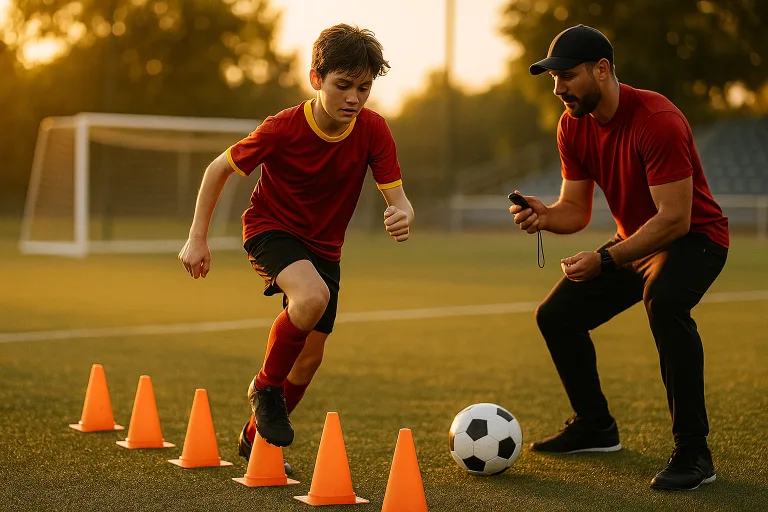
— Touch-and-turn drill: set 4 cones in a square, dribble to cone, perform a quick inside/outside turn, accelerate to next cone. 3–4 sets.
— Passing ladder: partner passes with one touch progressing to two-touch; focus on weight and accuracy.
— 1v1 challenge: small grid (6×8 m), attacker tries to dribble past defender for 30-second rounds. Rotate roles.
— Shooting routine: 6–8 shots from different angles using both feet — encourage proper foot placement and follow-through.
— Rondo (3v1 or 4v1): quick passing under pressure improves first touch and decision-making.
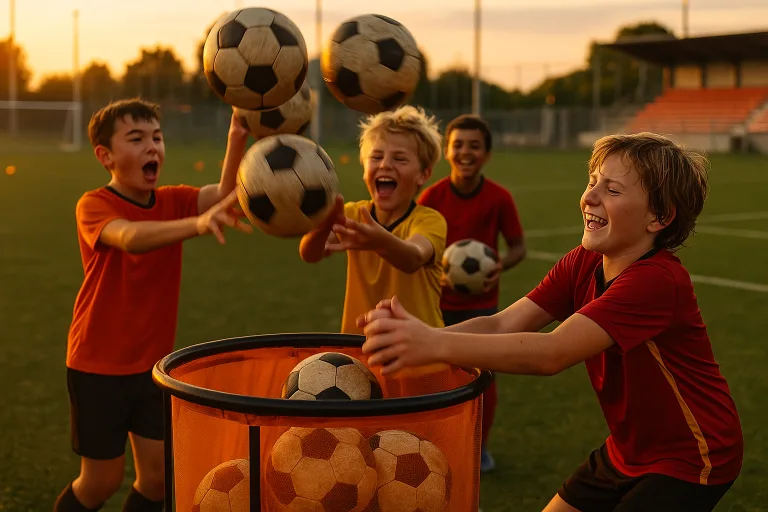
— Fun game: «Numbers game» — coach calls a number, player with that number must sprint to the ball and finish; keeps attention and reaction sharp.
Injury Prevention and Recovery
— Emphasize proper warm-up and cooldown.
— Teach basic movement mechanics (how to fall safely, change direction).
— Monitor workload and rest: watch for persistent soreness, reduced performance, or mood changes — these can signal overtraining.
— Ice acute injuries, seek medical attention for suspected fractures or severe sprains, and follow rehabilitation plans. Local clinics in Balashikha can recommend pediatric sports medicine resources.
Nutrition and Hydration (Simple Guidance)
— Balanced meals with carbs, protein, and healthy fats to support training and growth (e.g., porridge with fruit, lean protein with vegetables and potatoes/rice).
— Hydration: water before, during (short breaks), and after training; sports drinks only for long or intense sessions.
— Snacks: fruit, yogurt, sandwiches; avoid heavy meals immediately before play.