Raising Young Footballers in Balashikha: Training Methods, Parent Advice, Tournaments, and Inspiring Local Stories
Introduction
Balashikha and the surrounding Moscow Oblast offer a lively grassroots football scene for children aged 4–14. Whether your child is just kicking a ball in the yard or dreaming of academy trials, this guide gives practical training methods, age-specific tips, advice for parents, an overview of local tournament types, and short inspiring stories to motivate young players and families.
Why Balashikha is a great place to start
— Plenty of municipal sports centres, school programs and amateur clubs.
— Proximity to Moscow gives access to larger academies and regional competitions.
— Indoor halls and futsal courts make year‑round training possible during cold months.
— Active parent communities and youth festivals help kids get consistent match practice.
Training methods that work for ages 4–14
Principles to keep in mind:
— Focus on fun, ball contact and repetition for younger kids.
— Use small‑sided games (3v3, 4v4) to increase touches and decision‑making.
— Mix technical work, game‑like situations and general athletic development.
— Emphasize consistency: short daily practices beat long infrequent sessions.
Core session structure (30–75 minutes depending on age):
1. Warm‑up (dynamic movements, 6–10 mins)
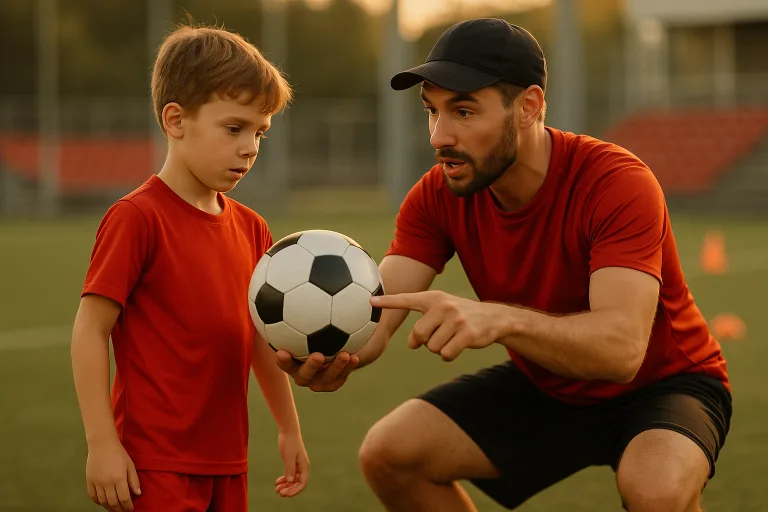
2. Technical drills (ball mastery, dribbling, passing, 10–20 mins)
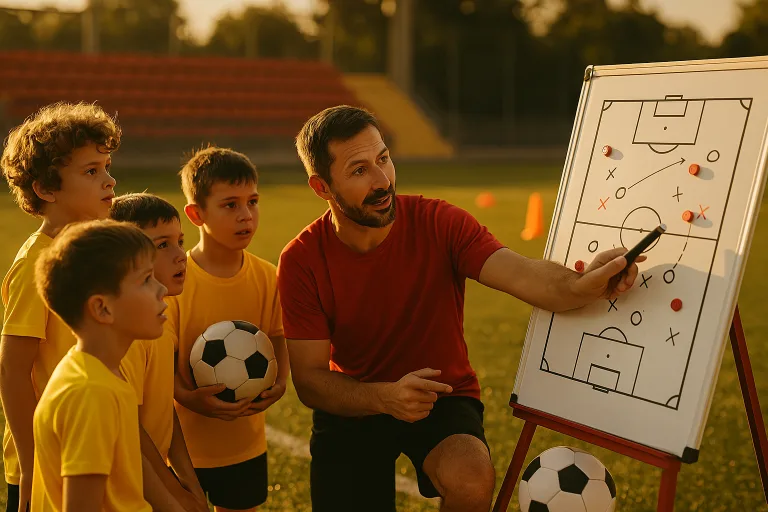
3. Small‑sided games / tactical work (15–25 mins)
4. Finishing or positional practice (10–15 mins)
5. Cool‑down and brief reflection (5–10 mins)
Effective drills:
— Ball mastery circuit (toe taps, inside/outside touches, foundations) — 5–8 minutes.
— Dribbling through cones with varied distances — develop close control and speed with the ball.
— Passing pairs to target (one-touch, two-touch progression) — use small goals or gates.
— 1v1 attack/defend duels — encourage creativity and shielding.
— Shooting from short combinations — emphasize accuracy first, then power.
— Game-based rondos (keepaway) — great for quick decision-making and pressing.
Age-specific guidance
— Ages 4–6 (start)
— Keep sessions 20–30 minutes, highly playful and ball-centered.
— Use games, obstacles and imaginative tasks rather than formal coaching.
— Goal: love of the game, basic motor skills, first ball confidence.
— Ages 7–9 (fundamentals)
— Sessions 30–45 minutes. Introduce more structured drills and basic rules.
— Focus: ball mastery, passing technique, spatial awareness.
— Start small‑sided competition but keep rotation so every child plays many positions.
— Ages 10–12 (skill development)
— Sessions 45–75 minutes, include fitness for coordination, agility and speed.
— Focus: tactical awareness (when to pass, dribble, shoot), combinations, first touch under pressure.
— Begin specialization in position, but encourage playing multiple roles.
— Ages 13–14 (refinement & pathway)
— Train twice or three times a week plus match play. Introduce strength basics and structured conditioning.
— Focus: tactical systems, decision making under fatigue, mental preparation.
— Support trials and exposure to stronger competition if the child shows commitment.
Practical weekly plan (example)
— 3 sessions per week + 1 match:
— Session 1 (Technical): 45 min — ball mastery, passing drills, shooting.
— Session 2 (Tactical & Small-sided): 60 min — rondos, 4v4, transition games.
— Session 3 (Athletic & Finishing): 50 min — speed/agility, finishing scenarios.
— Weekend: match or friendly festival.
Advice for parents (how to help without becoming the coach)
— Encourage play, not pressure: praise effort, creativity, and teamwork.
— Keep training fun — avoid overloading with too many extra sessions or private lessons too early.
— Communicate respectfully with coaches: ask about objectives, feedback, and playing time policies.
— Balance sport and school: ensure adequate sleep, homework time and recovery days.
— Logistics: plan club travel (Moscow trips) in advance; pack simple, consistent kit.
— Nutrition and hydration: balanced meals, carbs and proteins after training, water before/during sessions.
— Safety: make sure kids have proper shoes, shin guards; insist on warm‑ups and report injuries early.
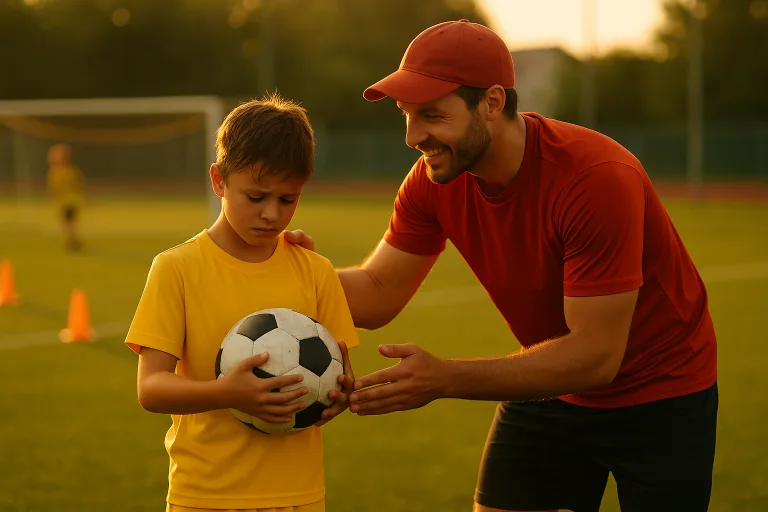
— Emotional support: teach resilience—losses are learning opportunities. Model calm behavior on the sideline.
Tournament overview & preparation (Balashikha / Moscow Oblast context)
Types of events you’ll encounter:
— Weekend mini‑tournaments and local friendlies (often small‑sided).
— Municipal school competitions and city/youth sports school (ДЮСШ) leagues.
— Moscow Oblast regional tournaments and age‑group championships.
— Indoor futsal festivals during winter.
How to prepare:
— Shorten training load 3–4 days before a tournament; focus on light technical work and rest.
— Practice set pieces and match scenarios (penalties, corners) in the week prior.
— Build match fitness with small-sided games rather than long runs.
— Encourage routine: consistent pre‑match meal, warm‑up and mental focus rituals.
— Logistics: check match times/locations, have spare kit, water and snacks, and a basic first‑aid kit.
How to find tournaments and clubs:
— Check Balashikha municipal sports website / local VKontakte groups / Telegram channels for youth sport events.
— Look for local ДЮСШ (youth sports schools), football academies, and school team announcements.
— Ask coaches about recommended regional tournaments in Moscow Oblast.
Injuries, rest and long‑term development
— Prioritize rest weeks and offseason recovery to avoid burnout and overuse injuries.
— Teach proper warm‑up and cool‑down routines early.
— For growth‑related pains (common ages 11–14), reduce intensity and consult a pediatric sports doctor when needed.
— Strengthen core, glutes and posterior chain with bodyweight exercises to support joints.
Inspiring local-style success stories
— «From Yard to Academy»: A 9-year-old girl from a Balashikha neighbourhood who trained twice weekly with a municipal program, attended city‑run festivals and was invited to trials at a regional academy by age 12 after coaches noticed