Growing the Next Generation: Football Training, Parent Advice, Tournaments and Success Stories for Kids in Balashikha
Introduction
Football for kids in Balashikha is more than weekend matches — it’s a path to fitness, teamwork and character. This guide brings together practical training methods for ages 4–14, clear advice for parents, what to expect at local tournaments, inspiring junior success stories, and everyday tips kids and families can use right now.
Training methods by age group
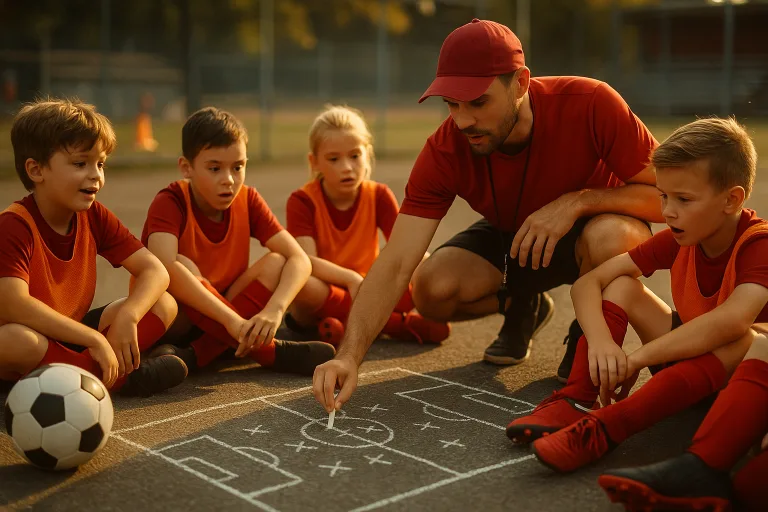
Training should match physical and cognitive development. Below are simple frameworks and drill ideas you can use in group sessions or at home.
— Ages 4–6 (Discovery)
— Goal: love the ball, basic coordination, short attention spans.
— Session length/frequency: 30–40 minutes, 2–3 times/week.
— Drills:
— Red light / Green light with dribbling (stop/start control).
— Follow-the-leader dribble around cones.
— Fun small-sided games (2v2 or 3v3) with tiny goals.
— Coaching style: lots of praise, games, very low instruction time.
— Ages 7–9 (Skill building)
— Goal: coordination, basic technique, simple tactical ideas.
— Session length/frequency: 45–60 minutes, 2–4 times/week.
— Drills:
— Passing triangles (pass–move–receive).
— 1v1 small goals to teach attacking/defending.
— Shooting from a few metres, focus on technique.
— Coaching style: simple instructions, start introducing positions.
— Ages 10–12 (Refinement)
— Goal: technique under pressure, decision-making, basic strength.
— Session length/frequency: 60–90 minutes, 3–5 times/week.
— Drills:
— Small-sided possession games (5v5) to encourage quick passing.
— Combination finishing drills (pass + first-time shot).
— Agility ladders and coordination circuits.
— Coaching style: feedback on choices, basic video or visual feedback.
— Ages 13–14 (Tactical awareness, physical preparation)
— Goal: tactical understanding, endurance, strength basics.
— Session length/frequency: 90–120 minutes, 4–6 times/week including strength/conditioning.
— Drills:
— Full-sided training phases (defensive transition, attacking patterns).
— Position-specific work (overlaps, crossing, defensive shape).
— Bodyweight strength (planks, squats, lunges), agility and sprint work.
— Coaching style: individualized feedback, load management, mental toughness.
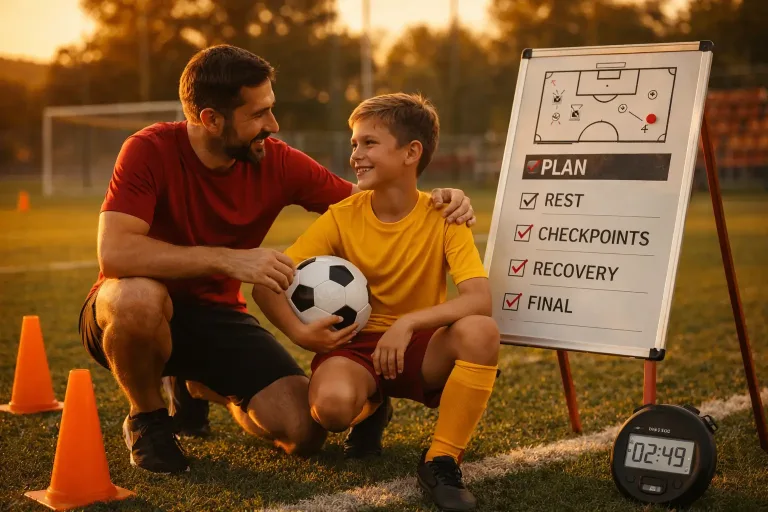
Sample weekly plan (ages 10–12)
— Monday: Technical session (passing, first-touch) — 60 min
— Tuesday: Rest / light individual practice (juggling, ball control)
— Wednesday: Tactical/small-sided games + conditioning — 75–90 min
— Thursday: Skill circuits (finishing, dribbling) — 60 min
— Friday: Light session or recovery (mobility, ball work)
— Saturday: Match day / tournament
— Sunday: Active recovery (walk, swim) and reflection
Practical drills you can do at home or in a park
— Wall passes: 5 minutes alternating left/right foot.
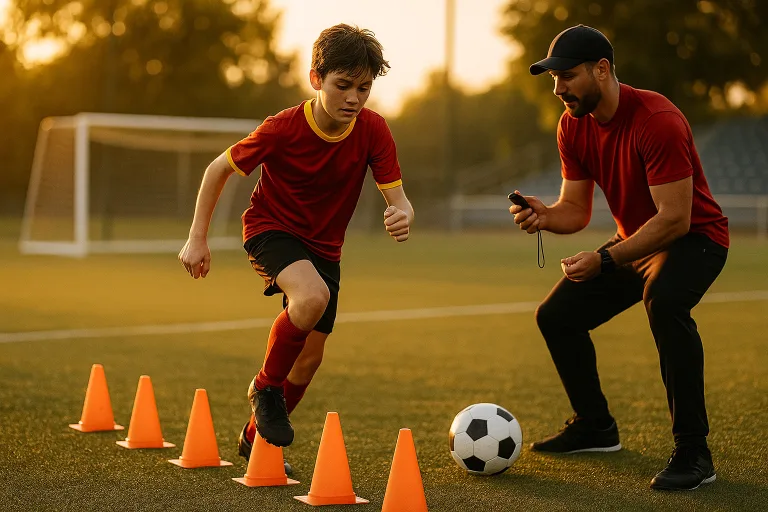
— 4-cone dribbling: weave slow then fast, concentrate on close control.
— Target shooting: set up a small target in the goal for accuracy.
— Shadow defending: one player dribbles slowly, the other practices stance and jockeying.
Advice for parents
Your role is huge — you’re the transporter, supporter and emotional coach. Here’s how to help without getting in the way.
— Emotional support
— Praise effort, not just results. Focus on improvement and teamwork.
— Avoid coaching from the sideline. Let the coach coach.
— Help kids set process goals (e.g., “I’ll control my first touch better”) rather than outcome goals.
— Practical support
— Ensure consistent attendance; routine matters more than intensity.
— Pack a balanced snack for training/matches (banana, wholegrain sandwich, water).
— Sleep is crucial: 9–11 hours for younger kids, 8–10 for teens.
— Health & safety
— Make sure the child has properly fitted shin guards and boots.
— Encourage warm-ups and cool-downs; teach basic stretching.
— Know concussion and injury basics; don’t rush return from injury.
— Choosing a club or coach
— Look for positive coaching philosophy