Growing Young Footballers in Balashikha: Practical Training, Parent Advice, Tournaments, and Inspiring Stories for Ages 4–14
Introduction
Balashikha is full of eager kids who love football. This guide brings together practical training methods, clear advice for parents, a simple tournament overview, inspiring (composite) success stories, and age‑specific tips for children aged 4–14. Use it to help your child enjoy the game, improve safely, and take part confidently in local competitions.
Why start young?
— Builds coordination, social skills, and healthy habits.
— Encourages teamwork, discipline, and confidence.
— Early, fun exposure to fundamentals makes later technical learning easier.
Training methods that work (for coaches and parents)
— Warm-up first: dynamic stretches, light jogging, mobility (8–12 minutes).
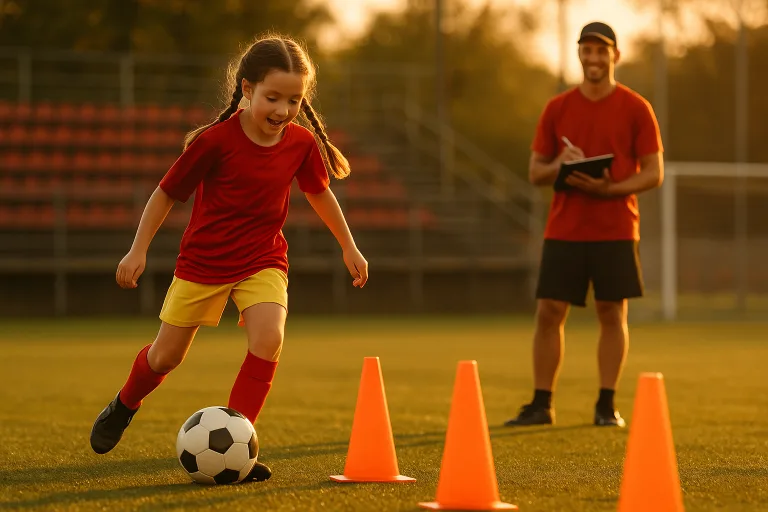
— Skill circuits: short stations (dribbling, passing, receiving, shooting) — rotate every 4–6 minutes.
— Small‑sided games: 3v3, 4v4, or 5v5 increase touches and decision-making compared to full 11v11.
— Ball mastery: simple solo routines — toe taps, inside/outside touches, pull‑backs; keep sessions playful.
— Passing under pressure: triangle passing, rondos (keep-away) to teach speed of play and movement.
— Game‑like drills: transition exercises (defend → attack) to teach positioning and awareness.
— Physical literacy: coordination ladders, hop/scissor jumps, balance work — no heavy strength training for younger kids.
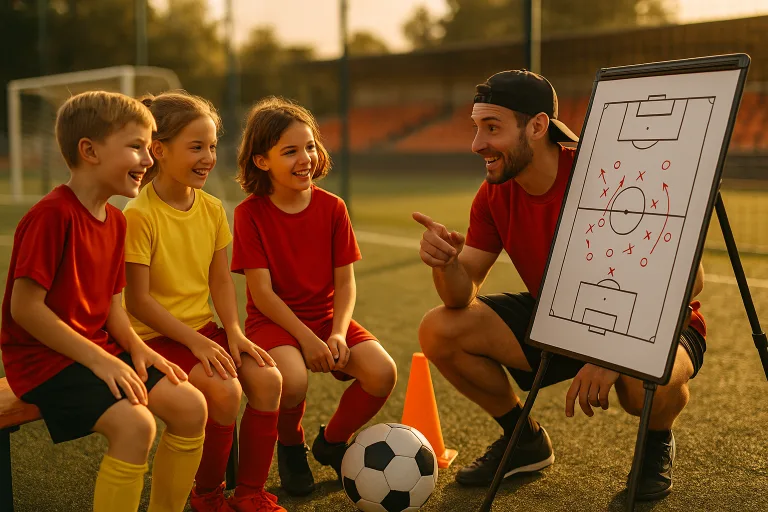
— Tactical basics: simple concepts—space, support, when to press, when to cover.
— Mental skills: goal-setting, positive self-talk, focus routines before games.
— Recovery: proper cooldown, hydration, sleep; monitor early signs of overuse.
Age-specific practical tips
— Ages 4–6 (fun & fundamentals)
— Sessions: 30–45 minutes, full of games.
— Focus: ball familiarity, running, balance, social play.
— Avoid structured tactics and long drills; keep it joyful.
— Ages 7–9 (skill building)
— Sessions: 45–60 minutes, 2–3 times/week.
— Focus: dribbling, passing, basic shooting, simple rules.
— Introduce small-sided matches to practice skills under pressure.
— Ages 10–12 (technique + simple tactics)
— Sessions: 60–90 minutes, 3 times/week plus optional technical work at home.
— Focus: first touch, weak‑foot use, positioning, set plays basics.
— Start match analysis: what worked, what to try next.
— Ages 13–14 (tactical awareness & physical prep)
— Sessions: 90 minutes, 3–4 times/week; include conditioning and sprint work.
— Focus: tactical roles, decision-making, strength & injury prevention.
— Encourage leadership and resilience.
Sample weekly plan (general)
— Monday: Technical session (ball mastery, passing circuits) — 60 min
— Wednesday: Tactical + small‑sided games (rondos, transition work) — 75 min
— Friday: Shooting & finishing + speed/agility — 60–75 min
— Weekend: Match or friendly; light recovery day after match
Adjust volume by age and fatigue.
Advice for parents
Do:
— Encourage effort and fun, not just results.
— Ask about coach qualifications and session structure.
— Ensure regular but balanced practice—avoid burnout.
— Provide proper kit: comfortable boots, shin guards, water bottle.
— Reinforce good sleep, hydration, and nutrition (balanced meals, snacks before games).
— Celebrate small improvements and positive sportsmanship.
Don’t:
— Over‑coach from the sidelines—let coaches teach.
— Compare your child to others publicly.
— Push them into too many matches or extra training if tired or injured.
Choosing a club in Balashikha
— Look for clubs with age‑appropriate groups, qualified coaches, safe facilities, and good communication.
— Ask for a trial session and references from other parents.
— Check municipal sports offers: Balashikha has municipal sports schools, private academies, and community teams—search local listings, VK groups, and Yandex Maps for up‑to‑date options.
Tournament overview (what to expect locally)
— Typical formats by age: U7–U9 often 5v5, U10–U11 7v7, U12–U13 9v9, U14+ 11v11 — confirm with each organizer.
— Levels: friendly festivals, city leagues, regional cups. Seasonal schedule: spring–autumn outdoor, winter indoor mini‑tournaments.
— Pre‑tournament checklist:
— Documents/registration confirmation and medical form.
— Full kit + spare shin guards and socks.
— Snacks, water, sunscreen (if outdoor), warm layers.
— Arrival time for warm‑up and coach briefings.
— Preparation tips:
— Practice set plays and penalty routines.
— Simulate match intensity in training the week before.
— Keep routines familiar: same warm‑up, playlist, simple pre‑match snack.
Injury prevention & safety
— Emphasize proper warm‑ups and cooldowns.
— Limit repetitive loading; vary activities.
— Teach safe tackling technique and fair play.
— See a doctor for any persistent pain or acute injury; follow return‑to‑play protocols.
Inspiring (composite) success stories
— From playground to local hero: Sasha, 8, started with simple street games in Balashikha. With two nights of playful training a week and one academy session, ball control improved dramatically. After a city festival, coaches invited him to a youth squad — a reminder that consistent, joyful practice opens doors.
— The late bloomer: Timur, 13, was smaller and less confident at 11. Focused work on coordination, vision, and a supportive coach helped him