How to Raise a Young Footballer in Balashikha: Training, Tournaments, and Practical Tips for Kids Aged 4–14
Introduction
Growing up in Balashikha offers great opportunities for children to start football early — from playground kickabouts to organized youth teams. This guide covers age-appropriate training methods, clear advice for parents, what local tournaments look like, inspiring (representative) success stories, and practical tips you can use right away.
Quick overview by age
— Ages 4–6: Playful introduction — focus on fun, basic motor skills, ball familiarity.
— Ages 7–9: Technical foundations — basic passing, dribbling, shooting, simple rules.
— Ages 10–14: Tactical awareness and physical development — positions, teamwork, more structured training.
Training methods (age-focused)
Ages 4–6: Make it fun
— Sessions: 30–45 minutes, high variety, short activities.
— Drills:
— “Red light / green light” with a ball (stop/start control).
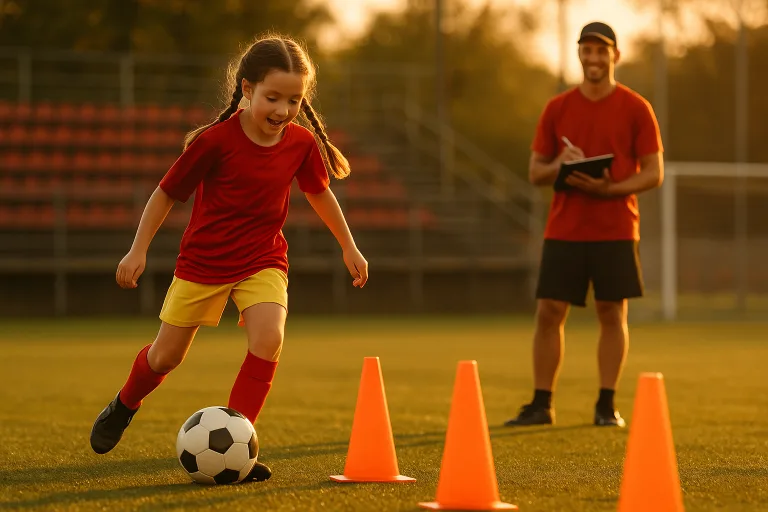
— Obstacle dribble (cones or toys).
— Small-sided tag games to improve balance and spatial awareness.
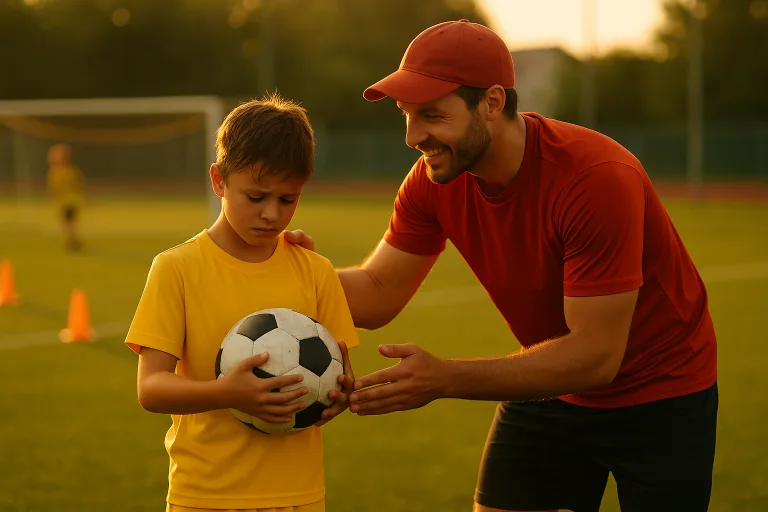
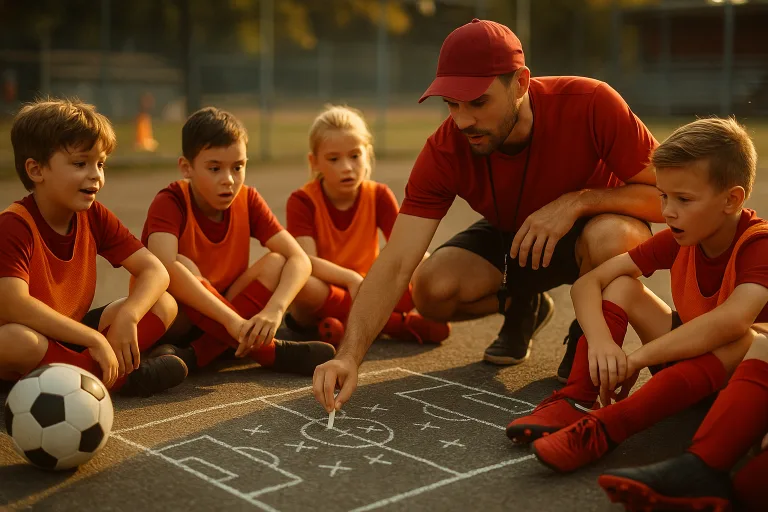
— Coach tips: Use simple language, praise effort, keep group sizes small.
Ages 7–9: Build fundamentals
— Sessions: 45–60 minutes, 2–3 times/week.
— Focus: Passing accuracy, inside/outside foot dribbling, first touch, basic shooting.
— Drills:
— Passing triangles to teach movement and support.
— 1v1 small goals to encourage creativity and confidence.
— Shooting from short distances with emphasis on technique.
— Progression: Introduce basic positioning and simple team shapes.
Ages 10–14: Introduce tactics and athletic development
— Sessions: 2–4 times/week (including one game), 60–90 minutes.
— Focus: Ball mastery, decision-making, defending principles, speed & strength (age-appropriate).
— Drills:
— Small-sided games (5v5 or 7v7) for tactical learning.
— Functional strength: bodyweight exercises (planks, squats, lunges), agility ladders.
— Pattern play (build-up from back, switching play).
— Periodization: Alternate higher-intensity days with technical/recovery sessions.
Sample weekly plan
— Ages 7–9:
— Mon: Technical session (passing/dribbling) 60 min
— Wed: Small-sided games & finishing 60 min
— Sat: Match or friendly
— Ages 11–14:
— Mon: Strength & speed + technical work 75 min
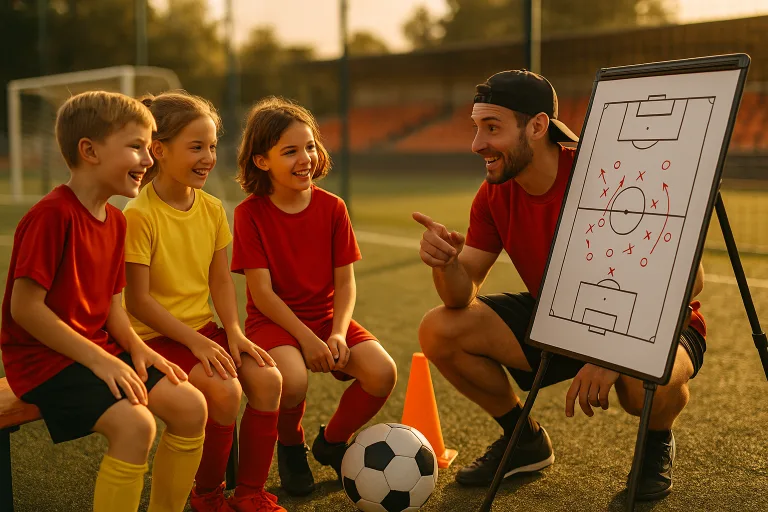
— Wed: Tactical session + small-sided games 75–90 min
— Fri: Set pieces & finishing 60 min
— Sun: Match
Practical drills you can do at home or a park
— Wall passes: one-touch and two-touch variations.
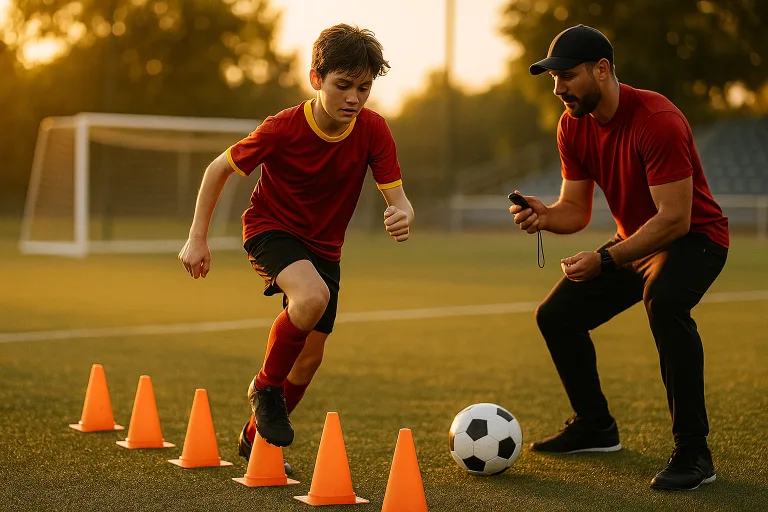
— Cone slalom with both feet for 5–10 minutes.
— Shooting challenge: 10 shots from different distances; count goals to build motivation.
— Keepy-ups challenge (short timed goals to improve touch).
Advice for parents
Emotional support & mindset
— Prioritize enjoyment and learning over early results.
— Praise effort, resilience, and teamwork more than scores.
— Encourage a growth mindset: mistakes are part of learning.
Health, safety & recovery
— Ensure proper warm-up and cool-down routines.
— Use quality shin guards and well-fitting shoes. Replace shoes when worn.
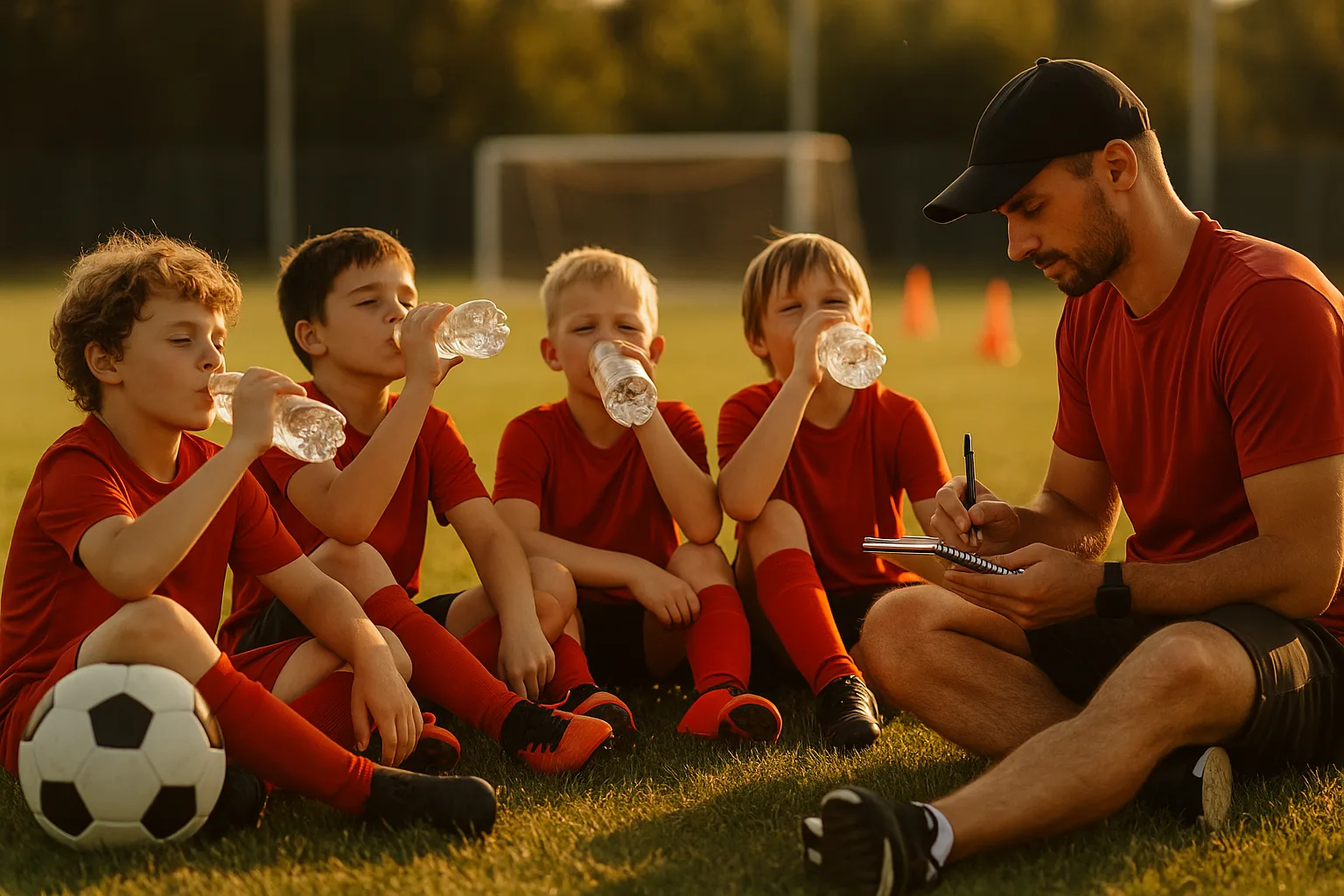
— Hydration and sleep: aim for consistent sleep schedules and water before/after sessions.
— Watch for overuse injuries—monitor pain and give rest during growth spurts.
Nutrition basics
— Balanced meals with protein, carbs, vegetables.
— Pre-training snack: banana or toast 30–60 minutes before.
— After training: carbs + protein (e.g., yoghurt + fruit, sandwich).
Choosing a club in Balashikha
— Look for: certified coaches, clear child-first philosophy, appropriate coach-to-player ratio, progression opportunities (friendly matches, league play), good communication with parents.
— Verify by: attending a trial session, speaking to current parents, checking municipal sport department listings and local social media communities for recommendations.
Communication with coaches
— Ask about training plans, match time policies, and individual development goals.
— Schedule constructive meetings mid-season rather than confronting after losses.
Tournaments & competitions — what to expect in Balashikha area
— Types of events:
— Local festivals and “fun” tournaments for youngest age groups (focus on participation).
— Small-sided leagues and cup competitions (5v5/7v7/9v9) common for U8–U12.
— Regional youth championships or city-level tournaments for stronger teams.
— Indoor futsal tournaments during winter months.
— Tournament format: round-robin group stage followed by knockout rounds is common; formats vary by age and organizer.
— Preparation tips:
— Ensure kids get adequate rest in the 48 hours prior.
— Bring snacks, drinks, extra clothing layers (Balashikha weather can be variable).
— Emphasize teamwork and simple game plans rather than pressure to win.
Inspiring (representative) success stories
(Note: these are composite examples based on common youth development paths in Russian youth football.)
— Misha’s steady rise: Started at 5 in a neighbourhood school program, practiced ball skills daily for 10–15 minutes, attended weekly club training at age 8, and by 12 was scouted to a Moscow academy thanks to consistent attitude and coachable behaviour. Key lesson: consistency and a positive attitude matter more than raw talent early on.
— Alina’s futsal advantage: Grew up playing indoor futsal during long winters, which sharpened her close control and quick passing. That technical foundation helped her stand out when transitioning to outdoor 9v9 matches at 11. Key lesson: diverse experiences (futsal + outdoor) accelerate technical development.
Motivation & long-term development
— Long-term athlete development: encourage a broad base—play other sports, family activity, free play. Specialization too early increases injury risk and burnout.
— Goal setting: set short-term process goals (e.g., «I will use my weaker foot 3 times per game») and long-term enjoyment goals.
Equipment & logistics for Balashikha families
— Essentials: good-fitting boots, shin guards, water bottle, layered clothes for cold, small first-aid kit.
— Winter alternatives: indoor halls and futsal keep practice consistent—check municipal gym schedules and local