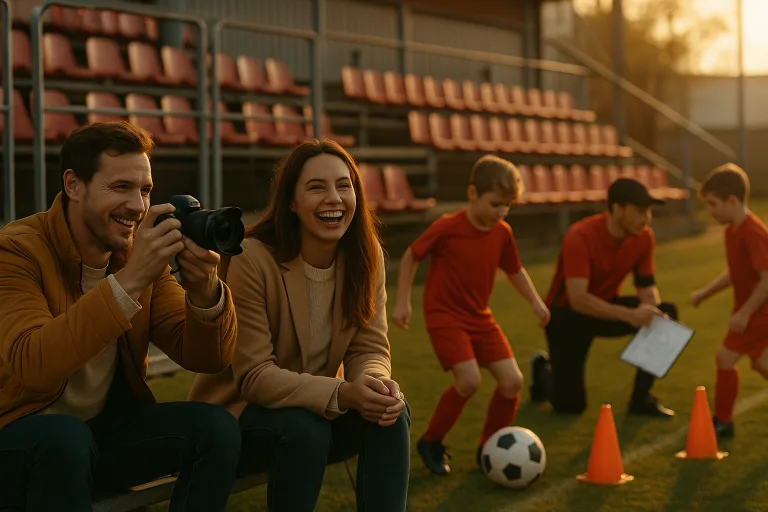
Young Footballers of Balashikha: Training Methods, Parent Advice, Tournaments, and Inspiring Stories (Ages 4–14)
Introduction
Balashikha is a great place for children to start and grow in football. This article brings together practical training methods by age, advice for parents, a local tournament overview, inspiring success stories from young players, and hands‑on tips you can use at home or at the pitch. Everything is focused on kids aged 4–14 and on building skills, confidence and a love of the game.
Age‑specific training methods and drills
Focus training on fun and mastery in early years, then add tactical awareness and physical preparation as kids grow.
Ages 4–6 (play and coordination)
— Session length: 30–40 minutes, 2–3 times/week.
— Goals: ball familiarity, balance, basic running and stopping.
— Drills:
— *Red Light / Green Light* with a ball — dribbling control.
— Cone treasure hunt — run, change direction, pick up cones.
— Small scrimmages (2v2) with no fixed positions.
— Coaching tips: use big, soft balls (size 3), lots of praise, keep stations short.
Ages 7–9 (fundamentals and ball mastery)
— Session length: 45–60 minutes, 2–3 times/week (+1 game).
— Goals: passing, receiving, dribbling, basic shooting.
— Drills:
— Wall passes and short passing lanes (inside of foot).
— 1v1 dice games (winner dribbles to goal).
— Dribble circuits: control, turns (pull back, Cruyff turn).
— Small‑sided games (3v3, 4v4) to increase touches.
— Coaching tips: encourage both feet, introduce simple rules and positions.
Ages 10–12 (technique + tactical awareness)
— Session length: 60–90 minutes, 3–4 times/week (games included).
— Goals: refined technique, simple tactics, teamwork.
— Drills:
— Passing triangles and rondos (support and quick combinations).
— Shooting drills from different angles: two‑touch finishing.
— 4v4 with neutral player to teach switching play.
— Speed‑agility ladder work (short bursts).
— Coaching tips: start video feedback (short clips), explain roles on the pitch.
Ages 13–14 (decision making and physical conditioning)
— Session length: 90 minutes, 4–5 times/week (including gym/core).
— Goals: position training, tactical systems, strength and speed.
— Drills:
— Full tactical sessions: build up from defense, overlap runs.
— Small‑group possession games (5v5+2).
— Plyometrics and basic resistance training (supervised).
— Set‑piece practice (defensive walls, attacking corners).
— Coaching tips: individual development plans, monitor load to prevent overuse injuries.
Sample weekly plan (concise)
— Ages 7–9: 2 technical sessions (45 min), 1 small-sided game, 1 family ball time (30 min).
— Ages 10–12: 3 sessions (2 technical, 1 tactical), 1 match, 1 recovery/stretch session.
— Ages 13–14: 4 weekly sessions (including gym), 1 match, 1 recovery session.
Practical drills parents can run at home
— 10‑minute ball touch challenge: count uninterrupted touches with each foot.
— Juggling ladder: start with 5 juggles and add 1 each week.
— Target passing: place cones or socks as targets and pass from 5–10 m.
— One‑on‑one challenge in a small yard: 3 defenders, 1 attacker, rotating roles.
Advice for parents
— Be a positive supporter: praise effort, not just results. Focus on learning.
— Choose the right club: look for qualified coaches, small‑sided games, and a child‑focused philosophy (ДЮСШ or private academies).
— Avoid overspecialization too early: encourage multisport until ~12–13.
— Manage time and rest: prioritize sleep and schoolwork; avoid burnout.
— Nutrition basics: regular meals, balanced carbs + protein, hydration before/during/after training.
— Equipment and safety: proper boots and shin guards, well‑fitted clothing, check pitch conditions.
— Injury prevention: warm up, cool down, teach correct landing and change of direction, rest injured areas and seek physiotherapy if