Growing Young Footballers in Balashikha: Training Methods, Parent Advice, Tournaments, and Practical Tips for Ages 4–14
Introduction
Football in Balashikha is thriving at the grassroots level. Whether your child is just discovering the joy of kicking a ball or is preparing for regional competitions, this guide gives practical, age-appropriate training methods, clear advice for parents, an overview of typical youth tournaments, inspiring local success stories, and daily tips you can use right away.
Training methods by age group
Focus areas, session length, and coaching priorities differ by age. Use these frameworks to plan practice—at the club or at home.
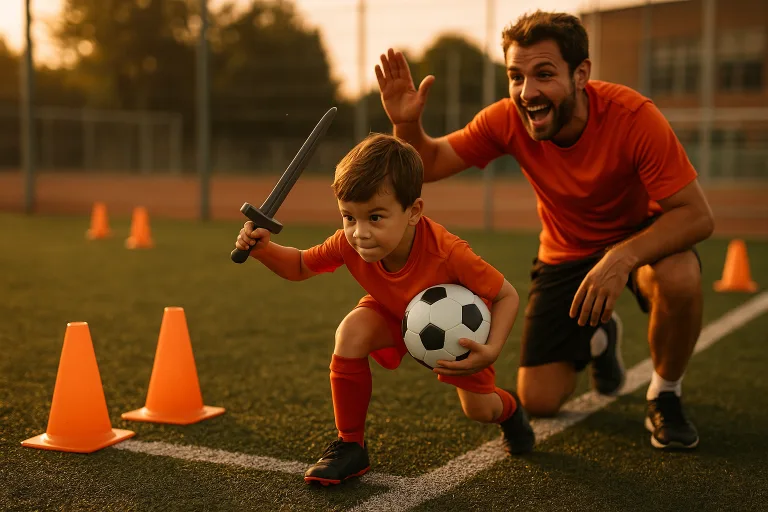
— Ages 4–6 (fun & fundamentals)
— Session length: 20–30 minutes of focused play (plus free play).
— Emphasis: ball familiarity, basic coordination, balance, simple games.
— Activities: “follow the coach” dribbling games, tag with a ball, obstacle courses, soft passes.
— Key goal: make football fun and develop motor skills.
— Ages 7–9 (skills & small-sided play)
— Session length: 45–60 minutes.
— Emphasis: ball control, passing technique, first touch, turning, basic tactical awareness.
— Activities: 1v1 skills, passing circuits, 3v3 or 4v4 small-sided games, shooting drills.
— Key goal: build confidence on the ball and decision-making in small spaces.
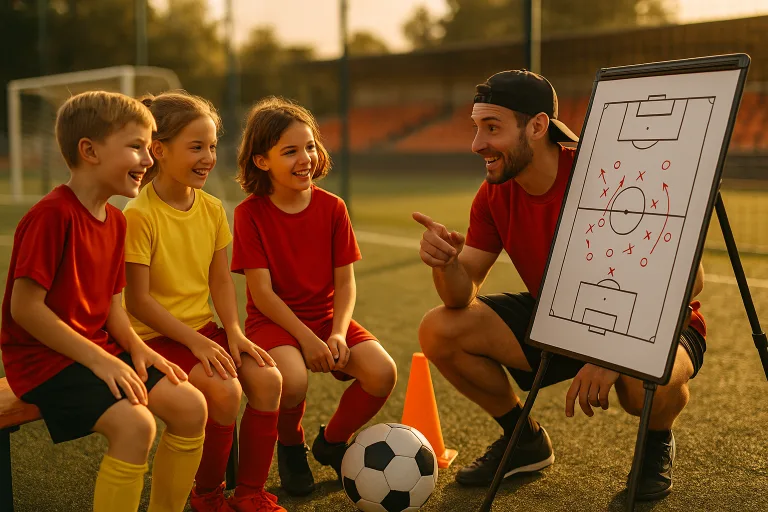
— Ages 10–12 (tactical learning & physical literacy)
— Session length: 60–75 minutes.
— Emphasis: positional understanding, teamwork, varied finishing, coordination and speed work.
— Activities: positional drills, larger small-sided games (5v5, 7v7), conditioned games (e.g., two-touch), sprint technique.
— Key goal: introduce structured tactics and improve physical conditioning safely.
— Ages 13–14 (specialization & competitive edge)
— Session length: 75–90 minutes (including warm-up and cool-down).
— Emphasis: tactical systems, strength and conditioning (age-appropriate), mental resilience, role specialization.
— Activities: full-sided training, set-piece practice, strength foundations (bodyweight, technique), video reviews.
— Key goal: prepare for higher-level competition with a balanced physical and technical program.
Practical drills and weekly plan
Simple drills parents can support at home and a sample weekly schedule.
— Core drills for all ages
— Ball mastery: 5–10 minutes daily (touches, circles, rolls).
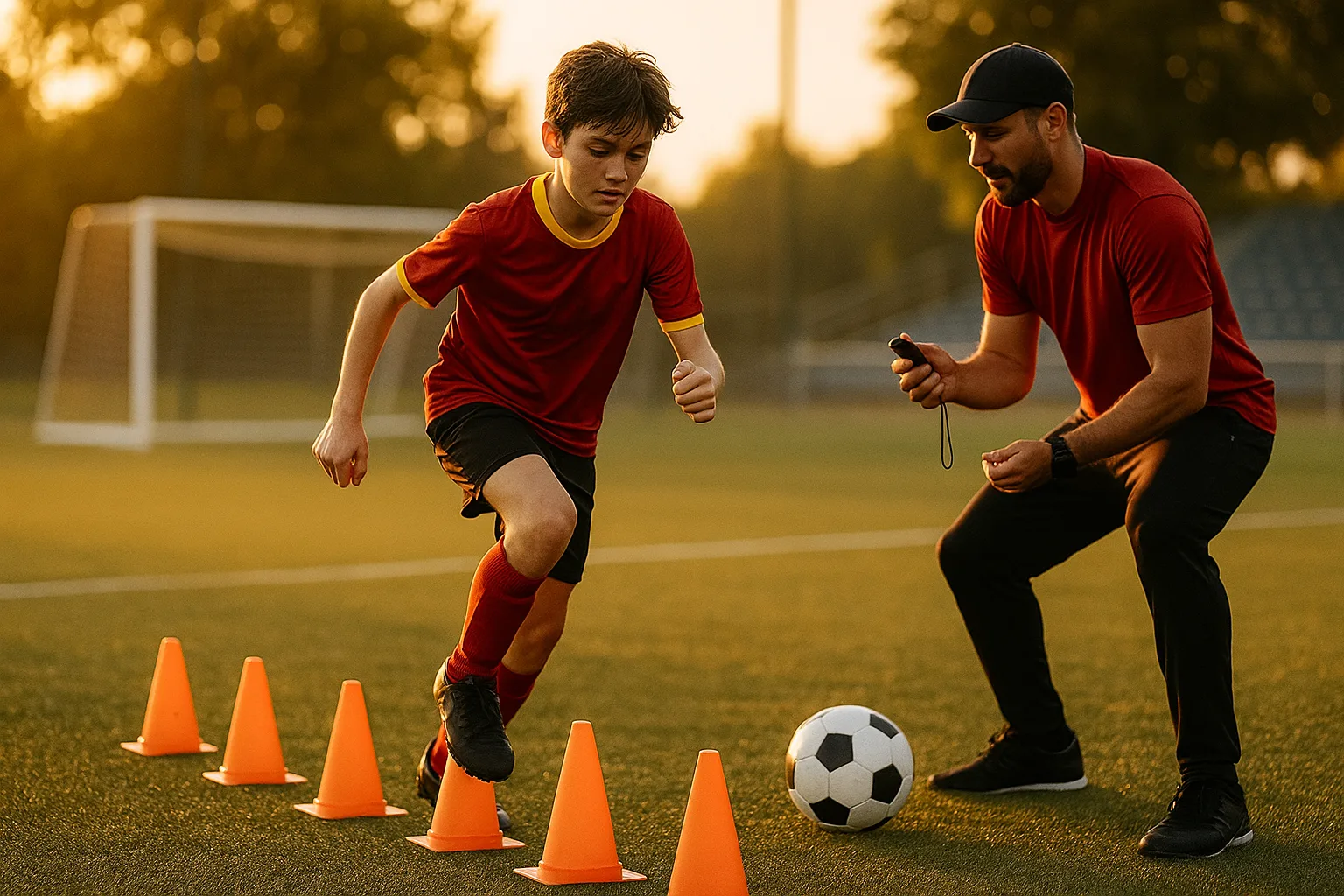
— Dribble-through-cones: improves close control.
— Passing ladder: short passes with walls or a partner, focus on accuracy.
— Shooting routine: basic placement and power, 6–12 shots focusing on technique.
— Coordination: ladder or hop exercises for agility and injury prevention.
— Sample week (U9/U11)
— Monday: Rest or light play
— Tuesday: Team practice (technical focus, 45–60 min)
— Wednesday: Ball mastery + coordination (30 min)
— Thursday: Team practice (small-sided games, 45–60 min)
— Friday: Light session: shooting/finishing (30 min)
— Saturday: Match day or friendly
— Sunday: Recovery: stretching, gentle bike/walk, mental game talk
Advice for parents
Parents play a huge role in a child’s football development—here’s how to help effectively.
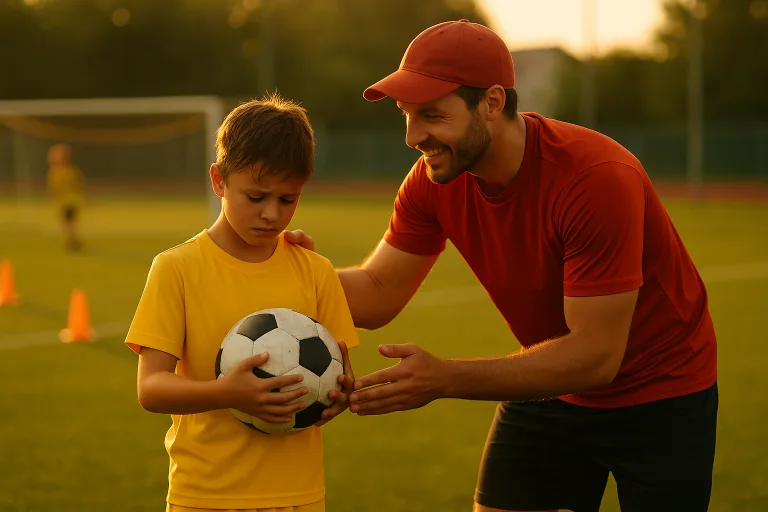
— Be supportive, not directive
— Encourage effort, resilience, and teamwork rather than only outcomes.
— Avoid coaching from the sideline—let the coach lead and offer positive reinforcement.
— Prioritize health and long-term development
— Ensure adequate sleep, balanced nutrition, and hydration.
— Avoid early specialization: let kids play multiple sports to build overall athleticism.
— Keep up with vaccinations and regular check-ups if playing intensely.
— Manage logistics and expectations
— Help your child arrive on time, warmed up, and with proper gear.
— Balance school, rest, and training—academic and emotional wellbeing matter.
— Communicate with coaches respectfully about development plans and goals.
— Safety and injury prevention
— Make sure they wear appropriate shin guards and footwear for the surface.
— Report injuries early and follow return-to-play guidance from a medical professional.
Tournaments and competitions (what to expect in Balashikha and the Moscow region)
Youth football competitions vary by age and format. Here’s a practical overview.
— Typical formats
— Friendlies/festivals: small-sided games, emphasis on experience and fun.
— Municipal leagues: Balashikha youth leagues and inter-club fixtures (often 7v7 or 9v9 for younger age groups).
— Regional tournaments: Moscow region championships for competitive teams, often full size 11v11 from U13 and up.
— Indoor winter tournaments: popular during cold months—focus on technical play.
— How to prepare for tournaments
— Logistics: check schedules, bring spare kit, water, first aid, snacks that are easy to digest (bananas, sandwiches).
— Mental prep: keep expectations realistic, focus on effort and learning, practice penalty kicks/set pieces.
— Recovery: cool down after games, rehydrate, gentle stretching, protein + carbs within 30–60 minutes.
Inspiring local success stories (composite examples)
Real results are built from consistent work. The following profiles are composite examples inspired by many young players from Balashikha and the Moscow region.
— From playground to regional team
— A boy started at age 7 at a local sports school (DYuSSh), practicing twice weekly. By age 12 he was scouted for a regional academy after a strong showing in a municipal tournament. Key factors: consistent ball work, positive attitude, and supportive parents who prioritized balanced training and schooling.
— The late bloomer who made the jump
— A girl who played many sports through childhood specialized at 13, focusing on technique and strength. Her multi-sport background helped her avoid injuries and accelerated her tactical learning; she earned a spot in an inter-regional squad at 14.
— Small-club success
— A small municipal club in Balashikha emphasized teamwork and fun. Several players from this environment advanced to competitive Moscow clubs because coaches prioritized individual improvement over winning at all costs.
Note: These are illustrative stories showing common pathways; every child’s journey is unique.
Mental skills and motivation
— Teach simple routines: pre-game breathing, visualization of positive plays, and focusing on process goals (pass completion, movement).
— Reward improvement, not just wins: praise effort, good decisions, and teamwork.
— Encourage resilience: let kids experience setbacks and learn from them rather than removing every challenge.
Equipment checklist and local considerations
— Essential gear
— Ball (size 3 for U8, size 4 for U9–U12, size 5 for U13+)
— Shin guards, cleats appropriate for grass or artificial turf, comfortable training clothes
— Water bottle, warm layers for colder months
— Balashikha-specific tips
— Expect seasonal shifts: indoor training during winter is common—check local clubs for indoor sessions.
— Look for municipal youth sports schools (DYuSSh) and community football programs; many run open trials or summer camps.
— Follow weather forecasts and plan warm-ups accordingly—cold muscles are more injury-prone.