Growing Young Footballers in Balashikha: Training Methods, Parent Advice, Tournaments, Success Stories, and Practical Tips for Ages 4–14
Growing Young Footballers in Balashikha
An actionable guide for parents and coaches in Balashikha, Russia, covering age-appropriate training methods, practical tips, tournament planning, and inspiring local success stories for kids aged 4–14.
Why this matters for Balashikha families
Balashikha offers plenty of green spaces, school gyms, and municipal sports programs (ДЮСШ) — plus easy access to Moscow-area competitions. With the right approach, young players can build technique, confidence, and a love of the game while enjoying local tournaments and pathways to regional teams.
—
Age-specific training methods (4–14)
Focus on fundamentals, fun, and progressive skill-building. Session lengths below assume 1–2 training days per week for beginners and 2–4 for more committed kids.
— Ages 4–6 (Discovery)
— Focus: ball familiarity, coordination, balance, basic movement.
— Session length: 30–40 minutes.
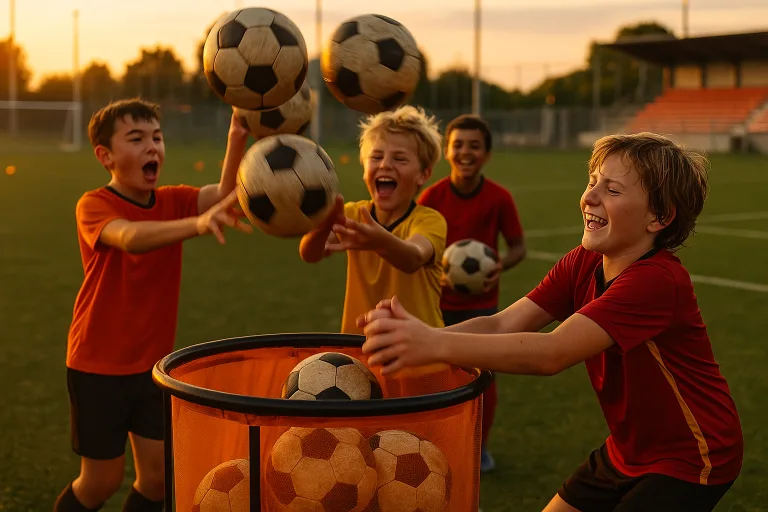
— Drills: “Red Light / Green Light” with a ball, simple dribbling obstacle courses, partner passing at 1–2 meters, games that reward movement and teamwork.
— Coaching tone: playful, positive reinforcement, short rotations.
— Ages 7–9 (Skill Foundation)
— Focus: ball control, first touch, basic passing, spatial awareness.
— Session length: 45–60 minutes.
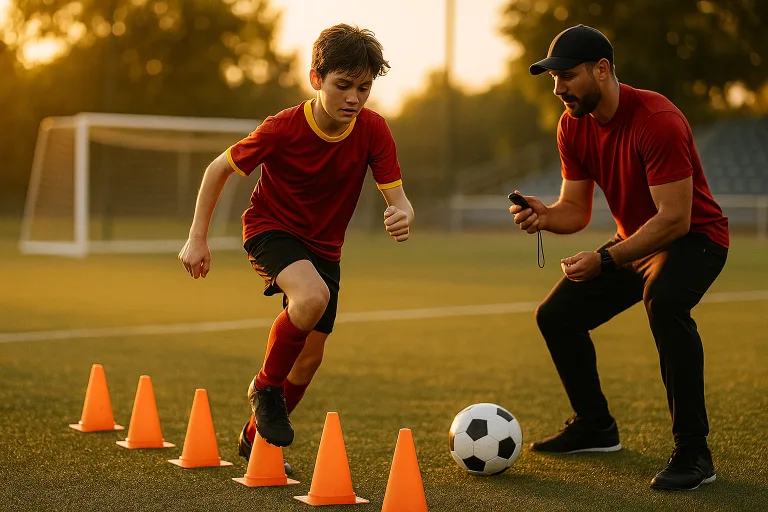
— Drills: cone dribbling lines, passing triangles, 1v1 challenges, small-sided 3v3 or 4v4 scrimmages.
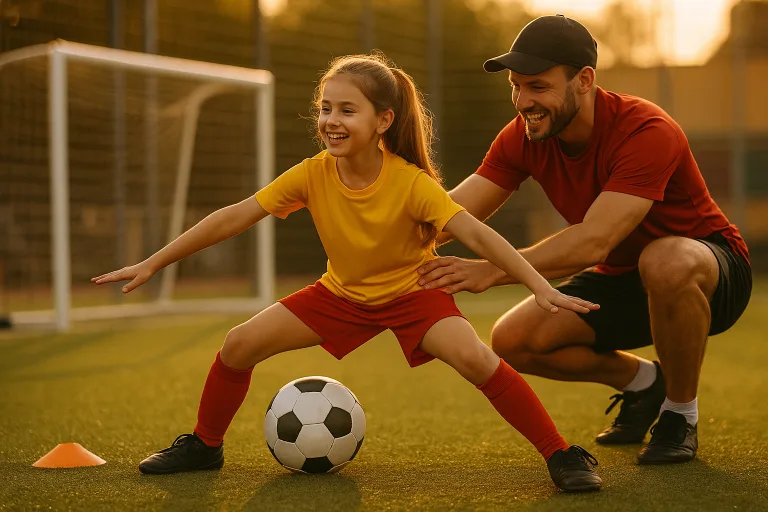
— Introduce simple principles: support, moving into space, defensive stance.
— Ages 10–12 (Tactical Introduction)
— Focus: technique under pressure, simple tactical roles, physical literacy.
— Session length: 60–75 minutes.
— Drills: rondos (possession games), shooting technique, switching play, conditioned games (e.g., limited touches), small-sided tactical scenarios.
— Start position basics and team shape (defend as a unit, basic build-up).
— Ages 13–14 (Game Intelligence & Physical Prep)
— Focus: refined technique, decision-making, strength/conditioning appropriate for teens.
— Session length: 75–90 minutes.
— Drills: pattern play, transitional drills (attack → defence → counter), finishing under pressure, speed & agility with ball.
— Add periodized conditioning and injury-prevention (core, hip mobility).
—
Sample session blueprint (all ages)
— Warm-up (8–12 min): dynamic movements + ball work (e.g., light dribbling, partners).
— Technical block (15–25 min): focused drill (passing, dribbling, first touch).
— Tactical/small-sided (20–30 min): 3v3–7v7 depending on age; emphasise specific learning outcome.
— Game/competitive finish (10–15 min): short full-intensity match or shooting game.
— Cool-down & feedback (5–10 min): stretching and 2 quick coaching points per player.
—
Practical drills parents can do at home
— 5-minute juggling challenge (count and set goals).
— Wall passes: push-pass and control rebound.
— Cone weave: 10 cones 1m apart — time daily and try to beat the time.
— Shooting from 6–10 meters into a target (use soft goal or marked area).
— 1v1 practice in a small “gate” — encourage feints and change of pace.
—
Advice for parents
— Choose the right coach and environment:
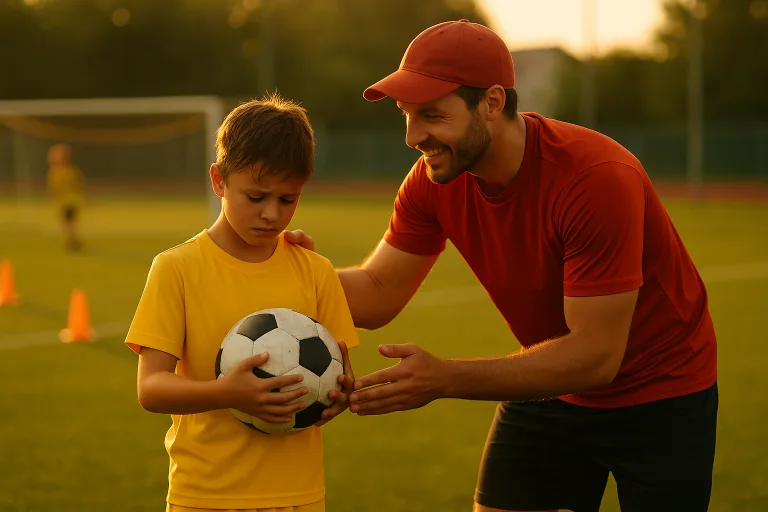
— Look for coaches who prioritise technical repetition, small-sided play, and child development over early specialization.
— Ask about coach certifications, child-safeguarding policies, and team rotation (equal game time).
— Encourage, don’t pressure:
— Focus on effort and improvement, not only results. Praise decision-making and hustle.
— Home support:
— Short, regular practice beats sporadic long sessions. 10–20 minutes daily improves technique faster than once-weekly long drills.
— Nutrition & recovery:
— Simple: balanced meals, hydration, 9–10 hours sleep for younger kids, proper footwear and recovery after games.
— Match day tips:
— Keep pre-game routine calm, bring spare socks, water, healthy snacks, and a basic first aid kit.
— Safety & well-being:
— Make sure the academy has safeguarding policies; insist on warm-ups and age-appropriate contact rules.
— Keep it social:
— Football is also social development — encourage friendships, team activities, and positive interactions with teammates.
—
Tournament overview — what to expect in Balashikha & nearby
— Types of tournaments:
— Municipal school cups and ДЮСШ leagues, weekend friendly cups, futsal (indoor) winter tournaments, Moscow Oblast regional events.
— Formats by age:
— U6–U8 typically 3v3 or 4v4; U9–U11 often 5v5 or 7v7; U12+ gradual move to 9v9 and 11v11 depending on federation rules.
— Season rhythm:
— Spring/Autumn: outdoor league matches and cups.
— Winter: indoor futsal/tournaments — great for technical work.
— Registration & preparation:
— Check local clubs, municipal sports department (администрация Балашихи), and social networks (VK/Telegram groups) for announcements.
— Expect short tournaments with multiple matches; coaches should rotate players to ensure equal playing time and reduce injury risk.
— What