Raising a Young Footballer in Balashikha: Training Methods, Parent Advice, Tournaments, and Practical Tips for Kids Aged 4–14
Introduction
Balashikha has a growing grassroots football scene: municipal sports schools (ДЮСШ), private academies, and many local pitches where kids can learn, play and compete. This guide gives age-appropriate training methods, practical tips for parents, an overview of typical tournaments, and inspiring (composite) success pathways for children aged 4–14.
Quick starting checklist for Balashikha parents
— *Find options:* search for “футбольная академия Балашиха”, local ДЮСШ, or community sports groups on VK/Telegram.
— *Try before committing:* attend trial classes or open sessions.
— *Ask the coach:* training structure, coach qualifications, child-to-coach ratio, safety and injury management.
— *Balance:* school, rest, free play — avoid overspecialization too early.
Training methods by age group
Training should match attention span, motor skills and physical maturity.
4–6 years: Foundations and fun
— Goals: ball familiarity, basic coordination, love of the game.
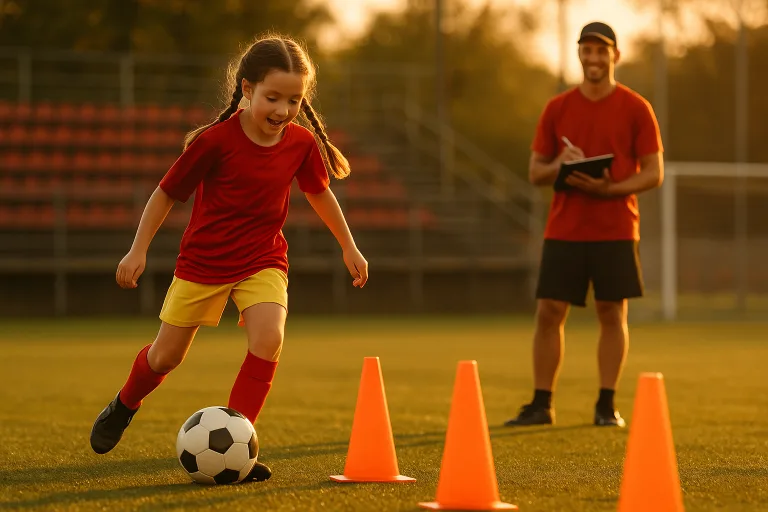
— Methods: short (20–30 min) playful sessions, relays, follow-the-leader dribbling, tag with a ball, small goal games (1v1, 2v2).
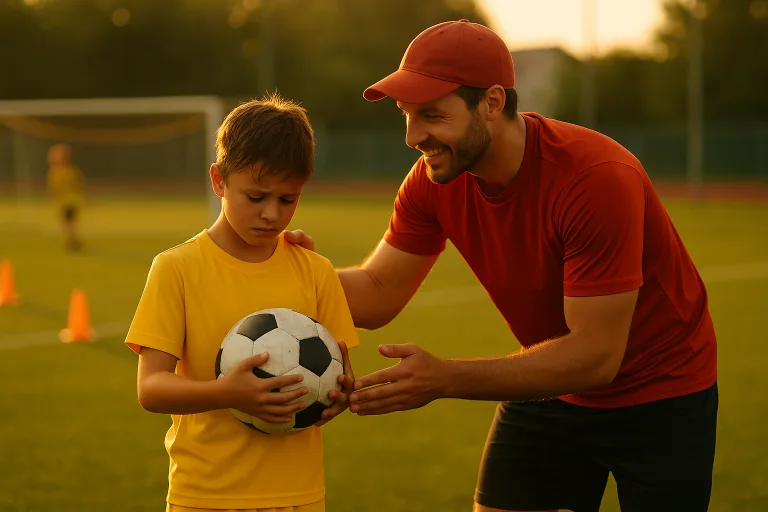
— Coach role: positive reinforcement, many touches on the ball, simplify rules.
7–9 years: Technique and small-sided play
— Goals: passing, receiving, dribbling, spatial awareness.
— Methods: drills with limited touches, 3v3 or 4v4 small-sided games, dynamic passing circuits, basic shooting drills.
— Emphasis: technical repetition disguised as games.
10–12 years: Tactics and decision-making
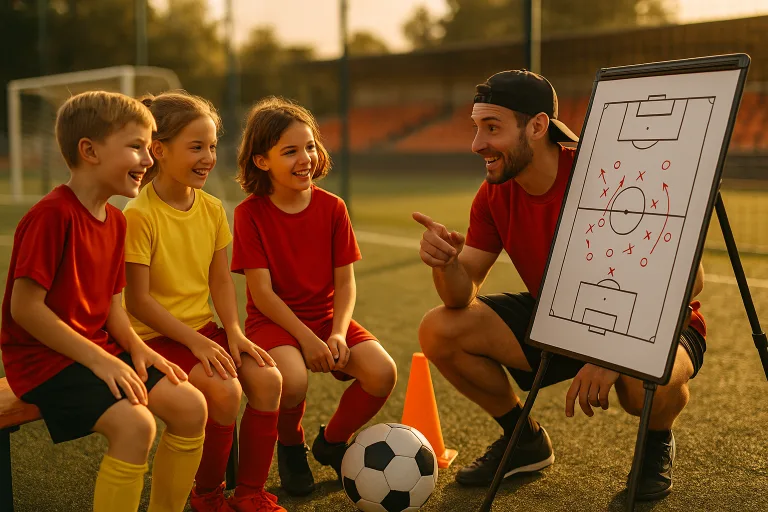
— Goals: positional awareness, tactical basics, team principles.
— Methods: 5v5–7v7 formats, pattern play, transition drills (attack-to-defend), conditioned games to teach pressing and support.
— Strength/conditioning: bodyweight exercises, mobility, age-appropriate speed drills.
13–14 years: Physical development and advanced tactics
— Goals: sport-specific strength, speed, decision-making under pressure.
— Methods: full 11v11 if available, tactical sessions, set-piece routines, individualized technical work.
— Conditioning: supervised strength work (focus on core, posterior chain), sprint mechanics, recovery protocols.
Sample weekly structure (example)
— 2 technical sessions (45–60 min)
— 1 tactical/team session (60–90 min)
— 1 small-sided match or scrimmage (60 min)
— 1 active recovery day or cross-training (swimming, cycling)
— Keep one full rest day
Practical drills parents can do at home or in the park
— Ball taps and toe-touches (1–2 minutes) for 7–9s.
— Wall passing drills (5–10 minutes) for control and accuracy.
— Cone dribbling slalom with time challenge.
— Shooting from different angles into small goals or target areas.
— “Two-touch” passing rondo (3v1) for quick decision-making.
Advice for parents
— Encourage effort, not just results. Praise work ethic, teamwork and improvement.
— Maintain routine: consistent sleep, meals, and training times.
— Be supportive at matches: positive encouragement > coaching from sidelines.
— Communicate with coaches respectfully and regularly: ask how to support development at home.
— Avoid early specialization: allow kids to try multiple sports until ~12–13. Cross-training reduces injury risk and builds overall athleticism.
— Watch for burnout and reduced enthusiasm — scale back if the child starts to dread sessions.
Choosing a club or coach in Balashikha
— Visit sessions: watch a practice before enrolling.
— Ask about coach certifications and child safeguarding policies.
— Check group size: smaller groups mean more touches and feedback.
— Look for structured season planning: technical blocks, friendly matches, fitness, rest periods.
— Consider logistics: travel time, cost, training times that fit school schedule.
Tournament overviews and what to expect
Types of events
— Friendly mini-tournaments and internal club cups.
— Municipal competitions run by local sports departments.
— Regional championships for Moscow Oblast age categories.
— Futsal or small-sided winter leagues in halls.
How to prepare
— Plan recovery (sleep, light meals) in 48 hours before games.
— Pack a match bag: two shirts, water, snack (fruit/banana), basic first-aid, shin pads, appropriate footwear.
— Warm-up routine: dynamic movement, ball touches, short sprints