Youth Football in Balashikha: Training Methods, Parent Advice, Tournaments, Success Stories and Practical Tips for Ages 4–14
Introduction
Balashikha is a city where grassroots football grows every season — school yards, municipal sports schools (ДЮСШ), futsal halls and private academies are full of kids learning the game. This article brings together practical training methods, parent advice, tournament guidance, inspiring local-style success stories and age-appropriate tips for children aged 4–14. Use this as a guide to build skills, keep motivation high and help young players thrive in Balashikha and the Moscow region.
Training methods by age group
Training should match physical, cognitive and emotional development. Below are recommended focuses and session structure for each age range.
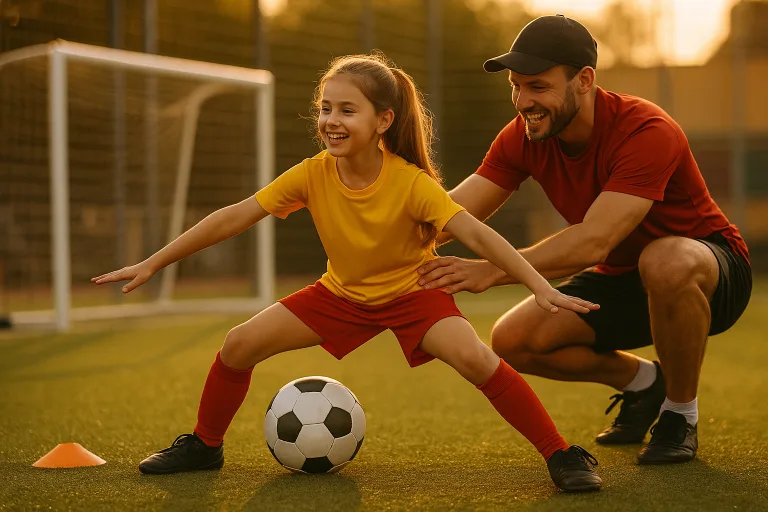
— Ages 4–6: Play, fun and basic motor skills
— Focus: coordination, balance, basic ball familiarity, short games (5–10 minutes each).
— Session (30–40 min): dynamic warm-up (5–7 min), ball games/coordination (15–20 min), small-group play/mini-matches (8–10 min).
— Methods: imaginative games (e.g., “treasure hunt with the ball”), obstacle courses, lots of positive reinforcement.
— Ages 7–9: Ball mastery and simple tactical ideas
— Focus: dribbling with both feet, passing technique, first touch, basic spatial awareness.
— Session (45–60 min): warm-up + coordination (8–10 min), technical drills (20 min), small-sided games (15–20 min), cool-down/stretch.
— Methods: repetition through short, fun drills, 3v3 or 4v4 games to encourage decision-making.
— Ages 10–12: Skill consolidation and tactical foundations
— Focus: positioning, passing combinations, finishing, introduction to set pieces, physical preparation (speed, agility).
— Session (60–75 min): technical drills (20 min), tactical exercises/positional play (20 min), conditioned matches (20 min), strength/mobility (5–10 min).
— Methods: progressive complexity in drills, more frequent small-sided matches, video review of simple game moments.
— Ages 13–14: Game intelligence and physical development
— Focus: team tactics, resilience, strength and conditioning basics, role specialization (positions).
— Session (75–90 min): individual skill work, tactical drills, full-sided practice, fitness components, recovery education.
— Methods: match analysis, periodized training load, individual development plans.
Practical drills and micro-sessions
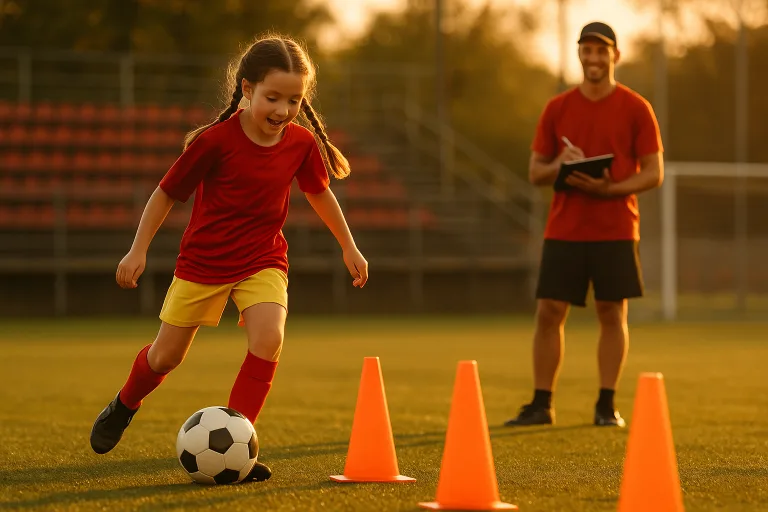
— Ball mastery (10 minutes): 1-minute sets of toe taps, inside-outside, V-pulls, both feet.
— Passing circuit (15 minutes): partner short passes, receive and turn, progressive distance.
— 1v1 challenge (10 minutes): attack vs defend in tight grid, first to score wins.
— Small-sided game (15–20 minutes): 3v3 or 4v4 with small goals, focus on quick transitions.
— Coordination ladder or cone agility (5–8 minutes): foot speed and balance work.
Advice for parents
— Encourage consistency over intensity — regular attendance and rest beats irregular extreme training.
— Avoid pressure: praise effort, resilience and improvement rather than only results.
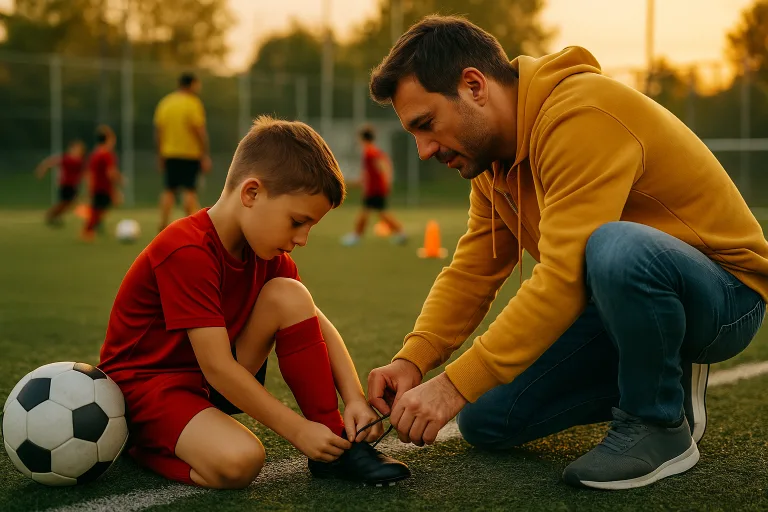
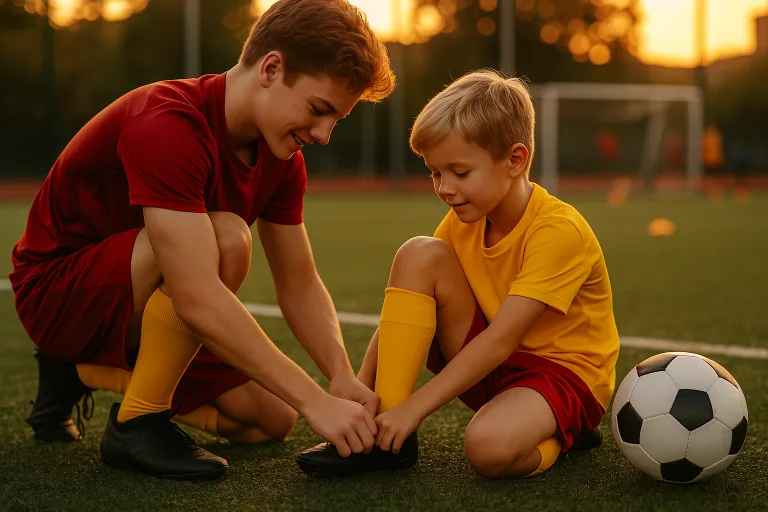
— Support basic habits: good sleep, balanced meals, hydration and proper footwear.
— Communicate with coaches: ask about objectives, training load and progress; share any health issues.
— Transportation and logistics: arrive early to warm up; bring spare clothes for sudden weather change.
— Let kids play different positions and sports until ~12–13 to build broad athleticism.
— Financial planning: local youth sport options vary — municipal ДЮСШ are usually more affordable than private academies. Ask about trial sessions.
Tournament overview and preparation (Balashikha / Moscow region)
— Types of competitions: municipal tournaments, inter-club friendlies, Moscow Region youth championships, futsal events in winter. Municipal sports departments and the Moscow Region Football Federation (Московская областная федерация футбола) typically publish calendars.
— How to prepare: simulate match conditions in training, practice set pieces, manage substitutions for recovery, teach children match routines (pre-match warm-up, half-time rest, cool-down).
— Game day checklist: registration documents, team kit, spare socks, water, first-aid basics, light snacks (bananas, bread with peanut butter), rain cover.
— Logistics in Balashikha: expect local fields and indoor halls; confirm venue surface (grass/turf/futsal) and travel time. Coordinate with other parents to carpool for away games.
Inspiring success stories (local-style vignettes)
— Masha (age 12): Started in weekend futsal sessions at 7, practiced ball control every day for 10–12 minutes, then joined a municipal team. By age 11 she was invited to regional selections — lesson: short daily habits compound.
— Timur (age 14): A shy kid who improved by focusing on one skill per week (first touch, left-foot passing). Coaches and parents emphasized confidence building; now he leads his school team.
— Anya (age 9): Switched between football, gymnastics and basketball until age 11; cross-training improved her agility