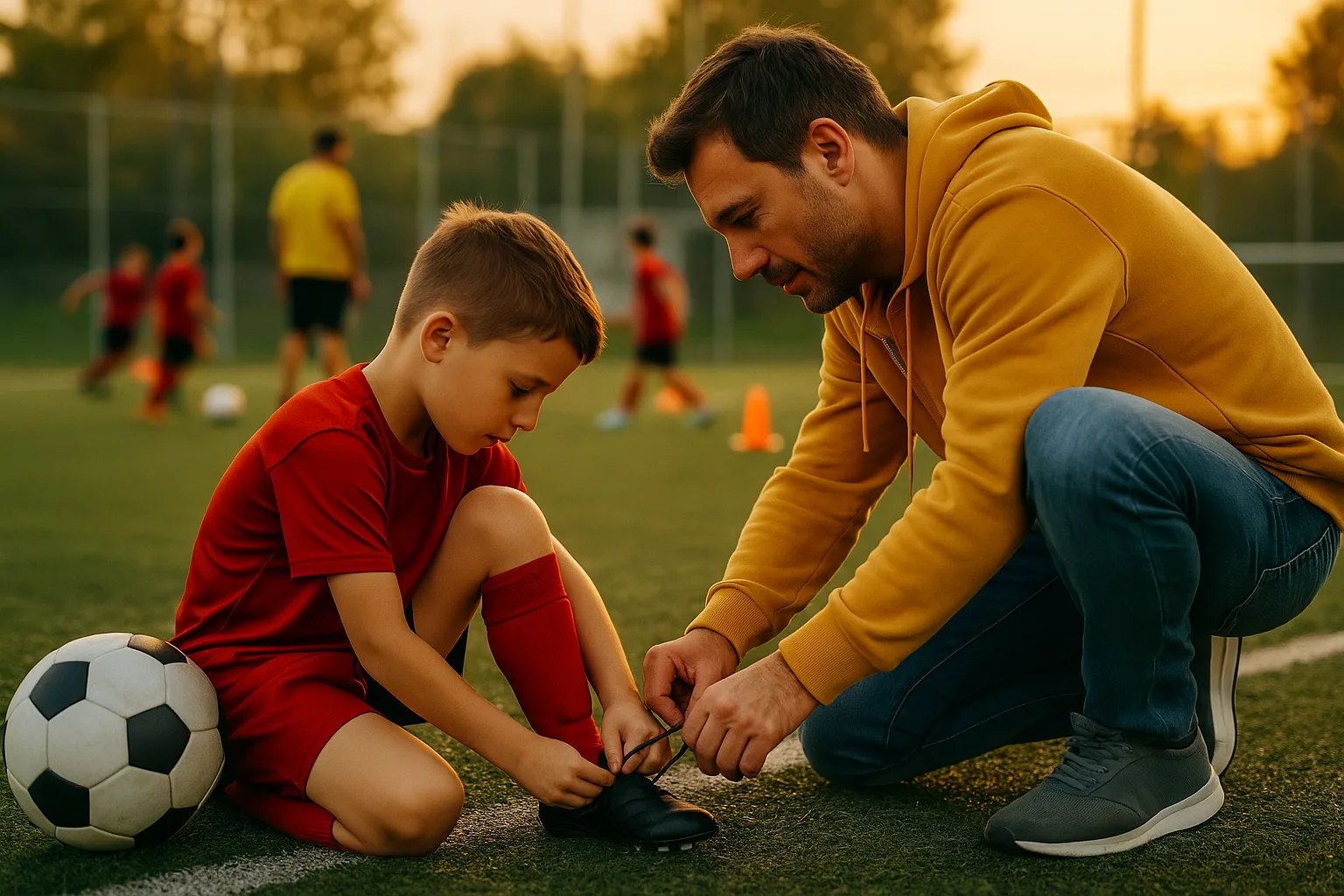
Growing Little Champions in Balashikha: Training, Tips, Tournaments, and Inspiration for Football Kids (4–14)
Growing Little Champions in Balashikha: Training, Tips, Tournaments, and Inspiration for Football Kids (4–14)
Football for children is about joy, movement and steady progress. This guide focuses on practical training methods, parent advice, tournament planning, inspiring success stories, and age‑appropriate tips for kids aged 4–14 in Balashikha and the Moscow Oblast region.
Quick overview: What to expect by age
— Ages 4–6: Playful motor skill development, ball familiarity, short attention span.
— Ages 7–9: Coordination, basic technique (dribbling, passing), small‑sided games.
— Ages 10–12: Tactical understanding, position basics, increased fitness.
— Ages 13–14: Competitive training, strength/conditioning, match tactics.
—
Training methods by age
Ages 4–6 — Foundation through play
— Focus: fun, balance, basic ball contact.
— Drills: tag games with a ball, obstacle courses, kicking targets, «stop and go» games.
— Session length: 30–40 minutes, high variety, lots of positive reinforcement.
Ages 7–9 — Technique and small‑sided play
— Focus: ball control, passing accuracy, basic defending.
— Drills: 1v1 games, rondos (small possession drills), passing sequences, shooting at targets.
— Format: 45–60 minutes, include warm‑up, 20–25 minutes of game‑like play.
Ages 10–12 — Decision making and stamina
— Focus: first touch, spatial awareness, simple tactics.
— Drills: positional small‑sided games (3v3, 4v4), transition drills, crossing and finishing.
— Add: light aerobic conditioning and agility ladders; emphasize recovery and rest.
Ages 13–14 — Competitive edge and physical preparation
— Focus: tactical systems, specialized positions, strength and injury prevention.
— Drills: scenario training, set pieces, team shape work, plyometrics with supervision.
— Include: strength basics (bodyweight, core), mobility, and load management.
—
Practical weekly sample plans
— Ages 7–9: 2 technical sessions (45 min), 1 match or small‑sided game (60 min), 1 fun ball session with family (30 min).
— Ages 10–12: 3 training sessions (60–75 min) — 1 technical, 1 tactical, 1 conditioning, plus weekend match.
— Ages 13–14: 4 sessions (75–90 min) — include strength/conditioning twice weekly, regular matches, and recovery day.
—
Advice for parents in Balashikha
— Prioritize fun and progress over early specialization. Children who enjoy training stick with it.
— Choose a coach/program with experience coaching youth and good references. Observe 1–2 sessions before committing.
— Balance school, sleep and football: aim for 9–11 hours of sleep for younger kids; avoid late‑night training.
— Encourage effort, not just results. Praise attitude, hustle, and teamwork.
— Supportive logistics: warm clothes and proper boots for outdoor seasons, indoor alternatives in winter (futsal halls are common in Moscow Oblast).
— Safety: ensure medical clearance for competitive play, and know the nearest clinic and emergency procedures.
—
Preparing for tournaments: a parent checklist
— Registration: check age group, roster limits, and deadlines.
— Equipment: two sets of shirts, shinguards, boots, extra socks, water bottle, light jacket.
— Nutrition: carb‑based snack before matches (banana, sandwich), protein after (yogurt, cottage cheese).
— Match day routine: arrive early, warm up 20–30 minutes, cooldown and stretching after.
— Rest and rotation: communicate with coach on playing time—at youth level, equitable minutes are best for development.
— Travel: for regional tournaments, pack for weather (Moscow Oblast weather is variable) and bring extra layers.
—
Local tournament overview & how to find events
— Types of competitions: local club friendlies, municipal youth championships, futsal tournaments in winter, regional Moscow Oblast youth leagues.
— Where to look: municipal sports department (Спортгородской отдел Балашихи), local sports schools (ДЮСШ), community football clubs, social media groups, and youth football academies in Balashikha and nearby Moscow.
— Winter option: many clubs switch to indoor halls and futsal—great for technical development and maintaining conditioning.
—
Inspiring success stories (realistic examples)
— Example 1 — From playground to academy: A 7‑year‑old who attended casual weekend sessions, practiced dribbling daily for 10–15 minutes, and joined a local academy at 9. By 13 they earned a spot on a regional youth squad thanks to consistency and coachability.
— Example 2 — Late bloomer: A child focused on multi‑sports until age 12, then specialized in football. Rapid technical improvement followed because broader athletic base reduced injuries and improved coordination.
— Takeaway: consistent practice, supportive coaching, and mental resilience matter more than early talent.
—
Practical, immediately usable tips for kids (4–14)
— Ball control: touch the ball every day for 10–15 minutes — juggling, inside/outside foot dribbles, and wall passes.
— 1v1 confidence: practice feints (step‑over, body feint) slowly, then at speed in small areas.
— Shooting: aim for corners, use both feet. Start close for technique, then increase distance.
— Passing: two‑touch passing drills — inside of foot, follow your pass to create angle.
— Fitness: short sprints, shuttle runs, and fun games (relay races) build speed and endurance.
— Recovery: hydrate, stretch lightly after sessions, and have 1–2 rest days per week.
— Mindset: set small goals (e.g., «complete 20 quality passes today») and celebrate progress.
—
Equipment & winter considerations in Balashikha
— Boots: firm ground studs for grass, turf shoes for artificial surfaces; indoor shoes for futsal.
— Clothing: breathable training wear; in winter, layers and thermal base layers; gloves and hat for very cold days.
— Indoor options: when snow and ice make outdoor training unsafe, use school gyms or futsal halls for ball mastery and small‑sided play.
—
How to choose the right club/coaching in Balashikha
— Look for certified youth coaches and clubs that emphasize development (not only winning).
— Ask about coach‑to‑child ratio, training plans, and progression pathways (friendlies, local leagues).
— Visit a session unannounced to see how children are treated and coached.
— Prefer clubs that communicate transparently about fees, tournaments, and expectations.
—
Final note — Long‑term development
Football for kids is a marathon, not a sprint. Encourage varied movement, patience, and a love for the game. With consistent practice, smart coaching, and parental support, children in Balashikha can enjoy the sport, improve steadily, and seize tournament opportunities across the Moscow Oblast.
If you want, I can:
— Draft a 6‑week age‑specific training plan for a particular age group.
— Help locate youth clubs