Young Football in Balashikha: Training Methods, Parent Advice, Tournaments and Inspiring Local Stories for Ages 4–14
Introduction
Balashikha is a great place for kids to fall in love with football — local sports schools, parks and community clubs offer many opportunities for boys and girls aged 4–14 to learn the game. This article gives practical training methods, clear advice for parents, an overview of local-style tournaments, inspiring anonymized success stories from the area, and age-specific tips to help young players develop safely and enjoyably.
Core training methods that work
— Small-sided games (2v2–5v5): more touches, quicker decisions and more fun than full 11-a-side for young players.
— Repetition with variety: teach a technique (dribbling, passing, shooting), then use a playful game to practice it under pressure.
— Technical first, then tactics: prioritize ball mastery and coordination in younger age groups; add tactical awareness gradually.
— Progressive overload: increase training volume or intensity slowly — focus on consistency rather than intensity spikes.
— Motor-skills and coordination: agility ladders, balance tasks, and unstructured play improve overall athleticism.
— Game-like scenarios: condition drills to mimic real-match situations (e.g., finishing under pressure, transitional play).
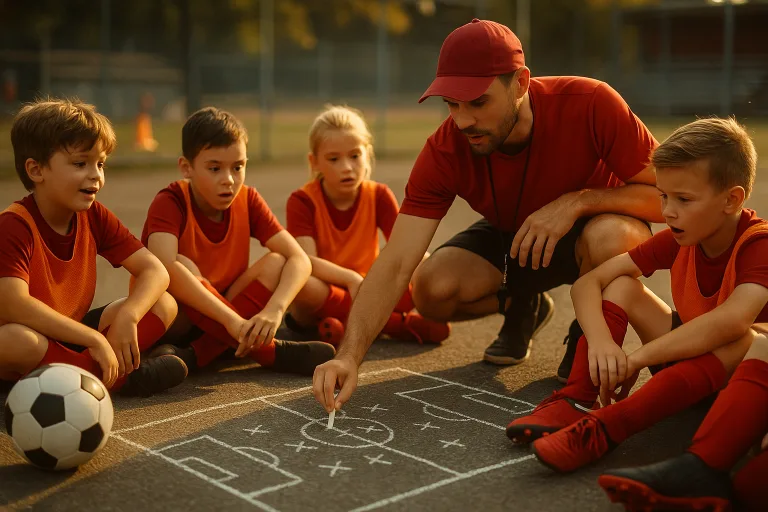
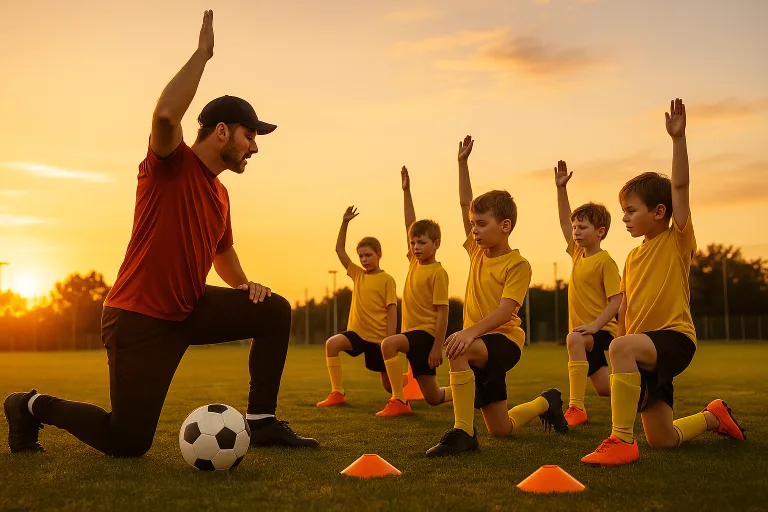
— Positive feedback and short, clear instructions: kids respond best to encouragement and demonstrative coaching.
Age-specific training & drills
— Ages 4–6 (Fun & fundamentals)
— Objectives: love of the game, basic coordination, ball familiarity.
— Session length: 30–45 minutes; 1–2 times/week.
— Drills:
— “Follow the leader” dribbling around cones.
— Gate game: pass/drive the ball through small goals.
— Freeze tag with a ball to combine movement and touches.
— Emphasis: fun, lots of touches, no long technical lectures.
— Ages 7–9 (Technique & simple decisions)
— Objectives: ball control, basic passing, first moves.
— Session length: 45–60 minutes; 2–3 times/week.
— Drills:
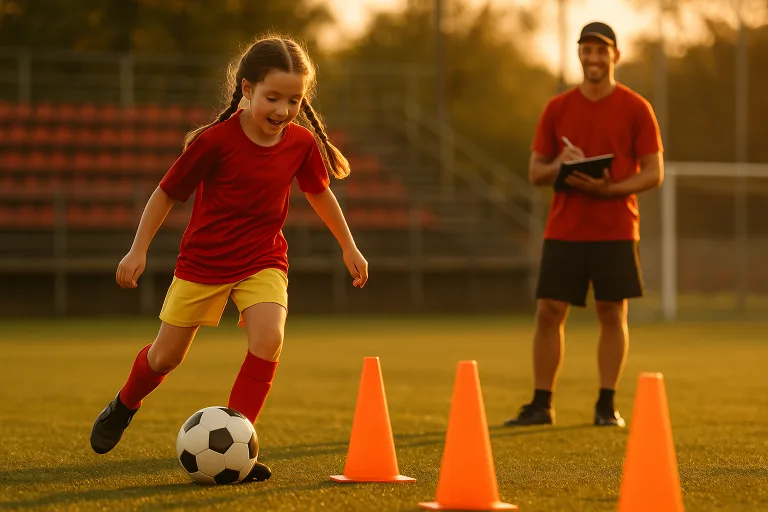
— Dribbling slalom (cones) with time challenges.
— 3v3 small-grid games to teach spacing and teamwork.
— Passing circuits with one-touch and two-touch progressions.
— Emphasis: purposeful repetition, simple tactical cues (support, space).
— Ages 10–14 (Tactical awareness & physical development)
— Objectives: refined technique, tactical understanding, athletic conditioning.
— Session length: 60–90 minutes; 3–5 times/week + matches.
— Drills:
— Rondo (4v2 or 5v2) to improve pressing and passing speed.
— Conditioned games (e.g., score more if teams switch quickly).
— Finishing drills under pressure, crossing + finishing.
— Emphasis: decision-making, varied physical training (speed, strength basics), recovery.
Practical drills you can try this weekend
— 1v1 Gates: set paired gates 5–8 m apart; attack and defend in short rounds — great for dribbling and defending.
— Four-Cone Passing: four cones in a square; one-touch passes around the square, then reverse direction.
— Shooting Relay: two teams, sprint to ball, control, and shoot at small goal — builds technique under fatigue.
— Balance + Ball Skill: single-leg balance while passing to a partner — improves core and ball control.
Advice for parents (Balashikha families)
— Encourage, don’t pressure: praise effort, attitude and improvements more than immediate results.
— Communication with coaches: be respectful, ask about long-term goals and how your child is progressing.
— Focus on basics at home: 10–15 minutes of ball touches daily helps more than occasional long sessions.
— Match day routine:
— Sleep well the night before.
— Light carbohydrate snack 60–90 minutes before (banana, porridge, sandwich).
— Hydrate before, during and after matches.
— Equipment and safety:
— Proper boots for surface (turf vs grass), fitted shin guards and comfortable clothing.
— Ensure warm-ups and cool-downs happen — reduce injury risk.
— Balance life and sport: school, family time and unstructured play are as important as training.
—