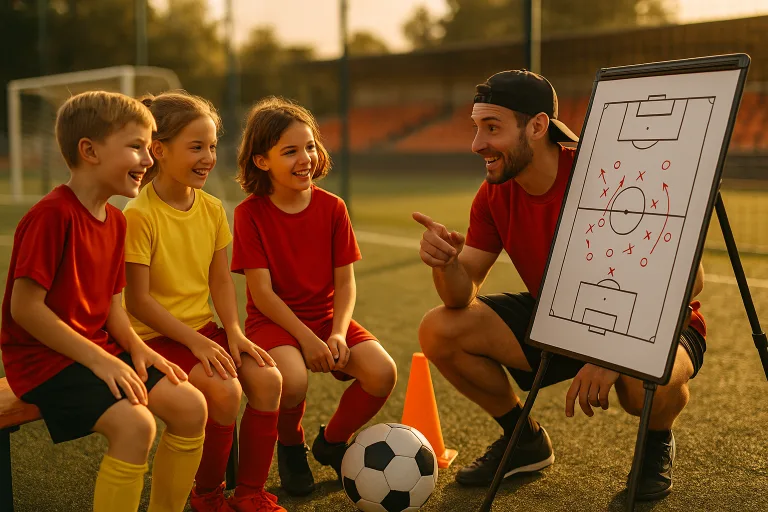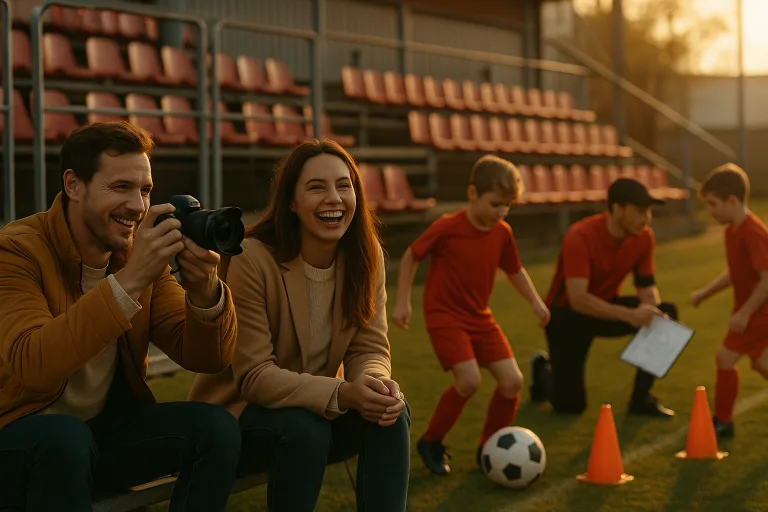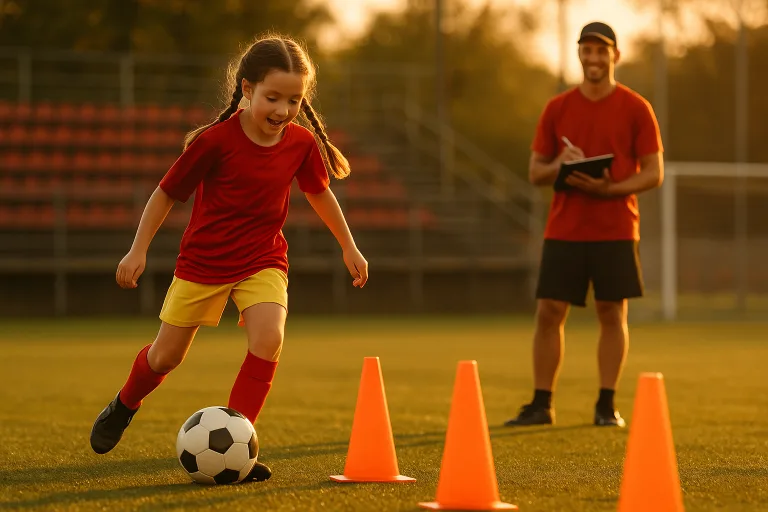
Growing Young Footballers in Balashikha: Practical Training, Parent Guidance, Tournaments, and Inspiring Stories
Introduction
Balashikha is a great place for kids aged 4–14 to start and develop as footballers: plenty of school teams, municipal sports halls for winter futsal, and summer pitches near Moscow. This guide bundles practical training methods, parent advice, tournament overviews, and short inspiring stories to help families and coaches support young players through each stage.
Training methods by age group
Focus changes quickly between ages. Keep sessions fun, short, and skill-focused for younger children; increase tactical and physical elements for older kids.
— Ages 4–6 (fun fundamentals)
— Focus: ball familiarity, balance, basic coordination, love of play.
— Session length: 30–40 minutes; 1–2 sessions/week.
— Methods: tag games with a ball, simple dribbling races, red-light/green-light, lots of praise.
— Ages 7–9 (technical repetition + small-sided play)
— Focus: ball mastery, passing basics, first defensive/attacking ideas.
— Session length: 45–60 minutes; 2–3 sessions/week.
— Methods: technical stations (dribbling cones, short passing), 3v3–5v5 games, simple finishing drills.
— Ages 10–12 (skills + decision-making)
— Focus: technique under pressure, spatial awareness, basic tactics.
— Session length: 60–75 minutes; 2–4 sessions/week.
— Methods: rondos/possession games, 1v1/2v2 finishing, conditioned games that train decisions.
— Ages 13–14 (physical development + tactical understanding)
— Focus: position-specific skills, strength/conditioning, team tactics.
— Session length: 75–90 minutes; 3–5 sessions/week plus matches.
— Methods: advanced tactical drills, speed and agility work, regular match analysis and feedback.
Practical drills and a sample weekly plan
Simple, repeatable drills are most effective. Keep variety and measure progress with fun challenges.
Sample weekly plan (10–12-year-old, 3 sessions + 1 match):
— Monday (Tech & Small Sided, 60 min)
— Warm-up (10): dynamic movements + ball touches
— Ball mastery (15): 1-touch/2-touch circuits
— Passing circuit (15): triangles and quick combinations
— 4v4 possession game (15)
— Cool-down & stretch (5)
— Wednesday (Shooting & 1v1, 60 min)
— Warm-up (10)
— Finishing drills (20): quick shots after 1–2 touches
— 1v1 attacking/defending (20)
— Small-sided match (10)
— Friday (Tactical + Speed, 60–75 min)
— Warm-up with sprint work (15)
— Rondo/possession drills (20)
— Tactical scenario (25): build-up to goal from wings/midfield
— Cool-down (5–10)
Drill examples:
— Cone maze dribble (6–8 cones close): improves close control (1–3 min rounds).
— Rondo 5v2: quick decision-making and first touch (3–5 min rounds).
— “Wall pass + finish”: pair gives one-two and shoots from edge of box (10–12 reps).
Advice for parents
Parents have huge influence. The right support helps kids love the game and progress.
— Prioritize fun and process over results — praise effort, creativity, and teamwork.
— Communication: meet coaches respectfully, ask about goals, playing time policies, and development plans.
— Equipment and safety: proper boots, shin guards, well-fitted clothing, and a water bottle. In winter, indoor futsal shoes are important.
— Balance: ensure adequate sleep, schoolwork, and varied sport/play to prevent burnout.
— Nutrition and hydration: regular meals, fruit/snack before training, hydration before/during/after sessions.
— Avoid early specialization: for most children, sampling other sports