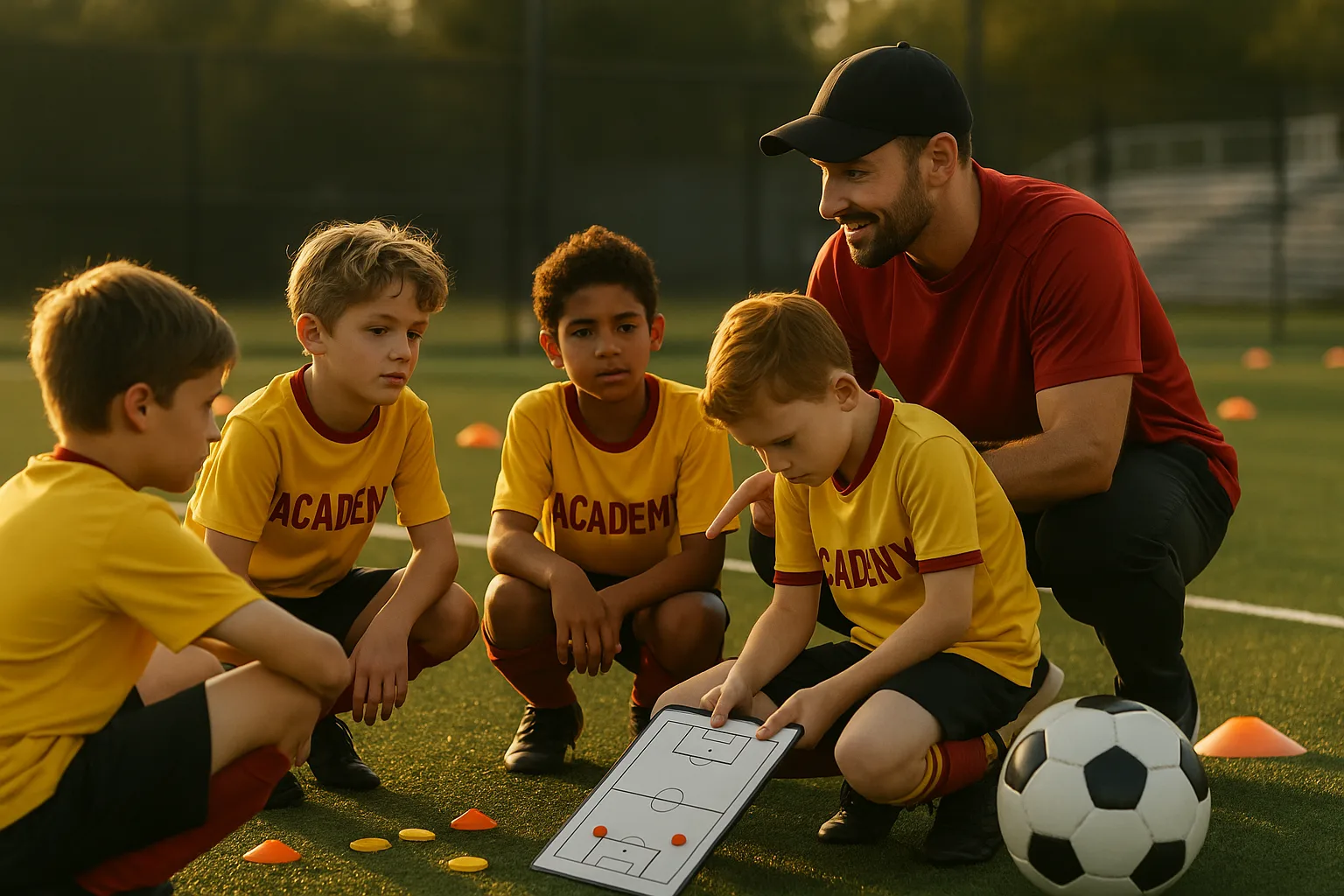
Football in Balashikha: Practical Training Methods, Parent Advice, Tournaments, and Inspiring Stories for Kids Aged 4–14
Introduction
Football in Balashikha is more than a hobby — it’s a way for kids to build fitness, teamwork, and confidence. This guide gives practical training methods, clear advice for parents, an overview of tournaments, inspiring success stories, and age-specific tips for children from 4 to 14 years old.
Quick overview for parents
— _Age range focus:_ 4–6 (play foundation), 7–9 (skill building), 10–14 (tactics, physical development).
— _Frequency:_ 1–3 short, quality sessions per week for younger kids; 3–5 sessions plus matches for older, motivated players.
— _Venues in Balashikha:_ municipal sports schools (ДЮСШ), private academies, school pitches and indoor futsal halls during winter. Check local community boards, VK/Telegram groups, and the Balashikha municipal sports department for current options.
Training methods by age
Ages 4–6 — Play, motor skills, ball love
— Session length: 30–45 minutes.
— Focus: coordination, basic ball contact, imaginative games.
— Sample activities:
— «Red light/green light» with dribbling.
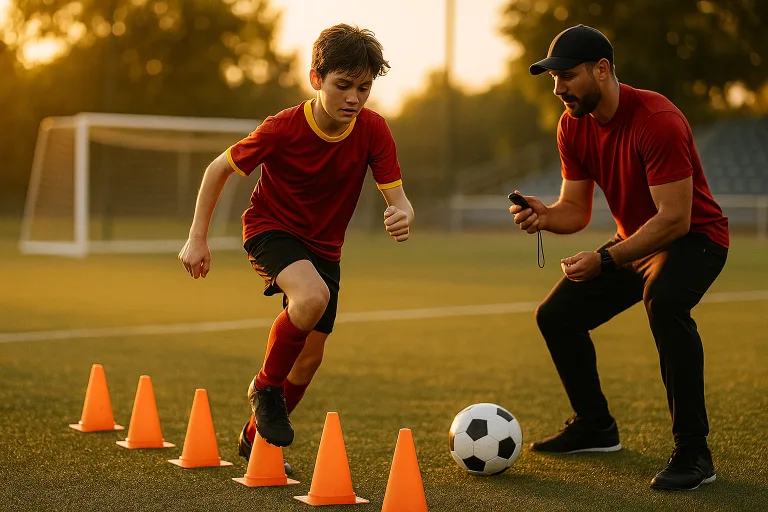
— Cone obstacles to improve coordination.
— Small-sided 1v1 games where winning is about creativity, not competition.
— Coaching tips:
— Keep instructions short and visual.
— Praise attempts and enjoyment over correct technique.
— Use soft foam or size 3 balls for control and safety.
Ages 7–9 — Technique and teamwork
— Session length: 45–60 minutes.
— Focus: ball mastery, passing, receiving, simple attacking/defending principles.
— Sample drills:
— Passing in triangles and small rondos (3v1 or 4v2).
— Dribbling relays and feint practice.
— 3v3 small-sided matches to emphasize decision-making.
— Progression:
— Introduce basic rules and positions.
— Start teaching spatial awareness and off-the-ball movement.
Ages 10–14 — Tactics, physical literacy, and mental skills
— Session length: 60–90 minutes (including warm-up and cool-down).
— Focus: refined technique, small-group tactics, speed & agility, strength basics.
— Training components:
— Technical repetition under pressure (passing at speed).
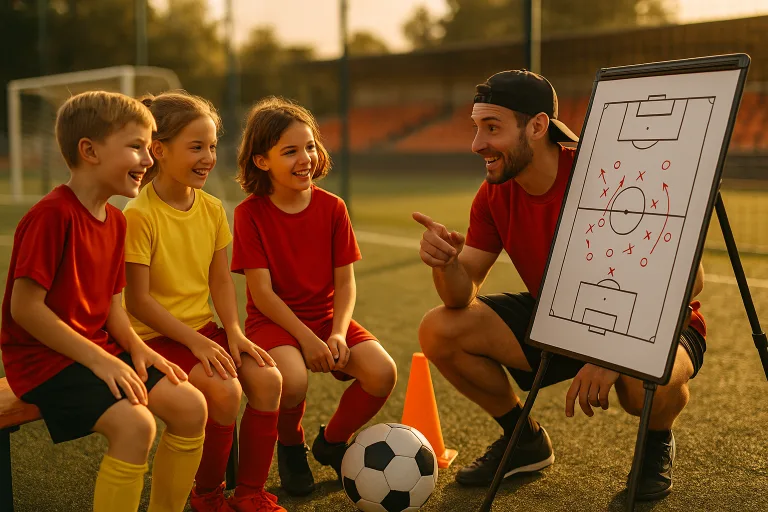
— Small-sided tactical scenarios (overloads, transition play).
— Age-appropriate conditioning (movement quality, balance, plyometrics).
— Long-term development:
— Encourage multi-sport activity to reduce burnout and injury.
— Emphasize learning over immediate results; maintain a growth mindset.
Weekly sample plan (age 10–14)
— Monday: Technical session (passing, first touch) + light conditioning.
— Wednesday: Tactical session (small-sided games and situations).
— Friday: Speed & agility + shooting practice.
— Weekend: Match day or friendly game.
— Recovery: Stretching, sleep, light active recovery the day after matches.
Practical drills you can do at home or in the park
— 5-ball juggling progressions (start with foot taps, move to alternating touches).
— Wall passes: one touch then two-touch sequences.
— Shooting from a cone target: practice accuracy before power.
— 1v1 challenge in a small grid to develop dribbling and defending.
— Keeper basics: throwing/catching drills with a soft ball, low dives on a mat.
Advice for parents
— Focus on long-term development, not just immediate trophies.
— Provide correct kit: size-appropriate ball, shin guards, comfortable boots, water bottle.
— Nutrition & sleep: balanced meals, snack choices around training (banana, yogurt), 9–11 hours sleep for younger kids.
— Emotional support:
— Celebrate effort, resilience, and teamwork.
— Avoid over-coaching from the sidelines; let coaches coach.
— If your child is anxious, talk privately with the coach to find supportive solutions.
— Injury prevention:
— Ensure thorough warm-up and cool-down.
— Address early signs of pain; rest and professional advice as needed.
— Encourage multi-sport play to reduce overuse injuries.
— Logistics:
— Keep important documents handy for tournaments (medical info, contact numbers).
— Carpool with local parents to reduce strain and foster community.
Tournament overview and how to prepare
— Local tournament types:
— Municipal leagues and school championships in Balashikha.
— Moscow Region youth tournaments and winter futsal competitions.
— Friendly cups organized by local academies and clubs.
— How to find events:
— Check Balashikha sports department announcements, club VK pages, school sports teachers, and local sports halls.
— What to prepare:
— Registration in advance, consent forms, copies of medical insurance or contact info.
— Two kits (home and away), spare socks, first-aid kit, snacks and hydration.
— Pre-match routine: light warm-up, dynamic stretching, simple tactical reminder.
— Tournament etiquette:
— Respect referees and opponents, focus on effort and behavior over the scoreboard.
— Use tournaments as experience-building, not only as a measure of talent.
Inspiring local-style success stories (anonymized lessons)
— Example 1 — From street games to regional selection: A child who loved playing with friends joined a ДЮСШ at age 9, trained consistently, and by 13 earned a spot in a regional squad. Key lesson: consistent practice, attending matches, and focusing on teamwork opened doors.
— Example 2 — Late bloomer who found position fit: A 12-year-old switched from striker to wing-back after exploring different positions during a summer camp. After focused training on crossing and defending, they became a key player. Key lesson: be open to trying new roles.
— Example 3 — Burnout avoided by balanced approach: A talented 11-year-old enjoyed two sports seasonally, which maintained enthusiasm and reduced injuries, eventually leading to better performance when specializing. Key lesson: balance and rest matter.
Coaching and selection reality — what parents should know
— Selection is often a snapshot; one game rarely defines a player’s future.
— Coaches look at attitude, coachability, and decision-making as much as technical skill.
— Encourage trial opportunities without pressuring kids; trials are learning experiences.
Mental and social development through football
— Football teaches resilience, leadership, communication, and problem-solving.
— Promote a growth mindset: praise effort, resilience after mistakes, and learning from losses.
— Social benefits: friendships, discipline, and community involvement in Balashikha clubs and school teams